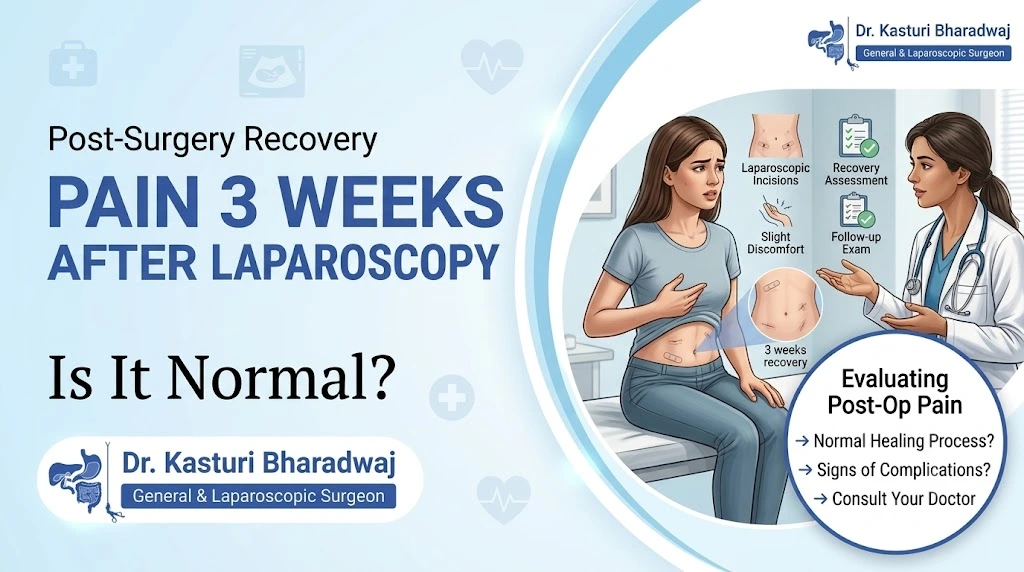
Experiencing pain 3 weeks after laparoscopy can be concerning, especially when you expected to feel better by this stage. Laparoscopic surgery, also known as keyhole surgery, uses small incisions and specialised instruments to diagnose or treat conditions inside the abdomen. Although it generally involves less postoperative discomfort than open surgery, recovery time varies depending on the procedure, the condition being treated and your overall health.
Mild tenderness around the incision sites or occasional discomfort may persist during recovery. However, pain that is getting worse, is not improving or occurs alongside other symptoms should not be ignored.
So, is pain 3 weeks after laparoscopy normal? Sometimes, but it depends on the type of pain, its severity and whether you are recovering as expected. This guide explains common causes, warning signs and practical steps to support recovery after laparoscopic surgery.
Is Pain 3 Weeks After Laparoscopy Normal?
Some patients continue to experience mild soreness, pulling sensations or tenderness three weeks after surgery. This can happen as the deeper tissues heal, particularly after more complex procedures.
However, recovery is not the same for everyone. A straightforward diagnostic procedure may involve a shorter recovery than an operation to remove the gallbladder, repair a hernia or treat another abdominal condition.
At three weeks, your discomfort should generally be stable or gradually improving. Persistent or worsening pain deserves medical assessment rather than being automatically attributed to normal healing.
Common Causes of Pain 3 Weeks After Laparoscopy
Several factors may explain abdominal pain or discomfort during recovery.
1. Healing of Incisions and Internal Tissues
Although laparoscopic surgery involves small cuts, the skin, muscles and internal tissues still need time to heal. You may notice tenderness near an incision, mild pulling when changing position or discomfort during certain movements.
These symptoms should gradually improve. Increasing redness, swelling, discharge or pain around a wound may indicate a complication and requires prompt medical attention.
2. Muscle Soreness and Physical Activity
Returning to household work, exercise, lifting or prolonged standing too quickly may aggravate healing tissues. Some patients notice discomfort when coughing, bending or getting out of bed.
Follow your surgeon’s instructions regarding activity restrictions. Avoid heavy lifting and strenuous exercise until you have been advised that it is safe to resume them.
3. Constipation and Digestive Discomfort
Reduced physical activity, changes in eating habits and certain pain medicines can contribute to constipation after surgery. Constipation may cause bloating, cramps and abdominal pressure.
Drinking adequate fluids, eating fibre-rich foods as tolerated and taking gentle walks may help. Ask your healthcare professional about suitable constipation treatment, particularly if you have significant abdominal pain.
4. Inflammation or Irritation
Some tenderness can occur as the body repairs tissue after surgery. However, persistent inflammation or irritation cannot be diagnosed from symptoms alone.
If discomfort continues without improvement, your surgeon may need to examine the incision sites and abdomen to determine whether further investigation is necessary.
5. Postoperative Gas Discomfort
Carbon dioxide is used to create space inside the abdomen during laparoscopy. Residual gas can irritate the diaphragm and cause abdominal or shoulder discomfort, particularly during the first few days after surgery.
Gas-related shoulder pain usually improves within days, not several weeks. New or persistent pain at the three-week mark should not automatically be blamed on surgical gas.
When Could Pain Indicate a Complication?
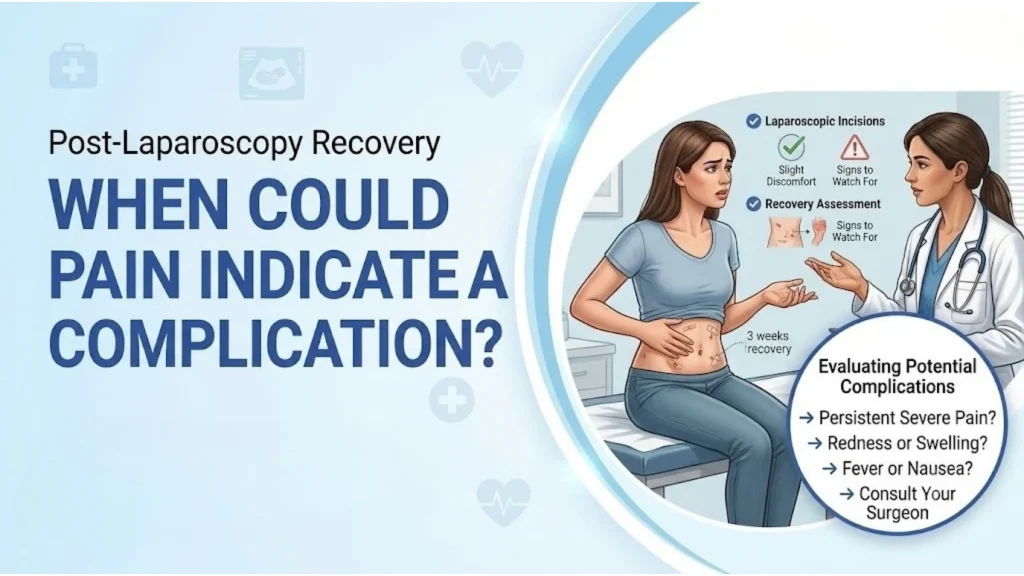
Although complications are not inevitable, persistent pain after laparoscopic surgery can occasionally indicate a problem requiring treatment.
Surgical Site or Internal Infection
An infection may affect the incision or deeper tissues. Possible warning signs include:
- Increasing pain, redness or warmth around the incision.
- Pus or unusual discharge from the wound.
- Fever or chills.
- Worsening abdominal tenderness or feeling generally unwell.
Contact your surgeon promptly if these symptoms develop.
Incisional Hernia
A hernia can develop when tissue pushes through a weakened area of the abdominal wall near an incision. You may notice a new lump, swelling or discomfort that becomes more noticeable when coughing or standing.
A painful lump that becomes firm or is accompanied by vomiting requires emergency assessment.
Internal Bleeding or Organ Injury
Significant internal bleeding or injury to an abdominal organ is uncommon but potentially serious. Severe or increasing abdominal pain, marked swelling, dizziness, fainting or unusual weakness should never be ignored.
Seek emergency medical care if these symptoms occur.
Abdominal Adhesions
Adhesions are bands of scar tissue that may form inside the abdomen after surgery. Many cause no symptoms, but some can contribute to persistent pain or bowel obstruction.
Adhesions cannot be confirmed from pain alone. If symptoms persist, your doctor may recommend an appropriate examination or investigations. Learn more about adhesiolysis surgery for abdominal adhesions.
Bowel Obstruction
A bowel obstruction can cause cramping or severe abdominal pain, increasing bloating, vomiting and difficulty passing stool or gas. These symptoms require urgent medical evaluation, particularly after abdominal surgery.
Do not attempt to manage suspected obstruction at home with laxatives or home remedies.
Warning Signs: When Should You Contact Your Surgeon?
At three weeks after laparoscopy, contact your surgeon if pain is not improving, returns after getting better or interferes with normal daily activities.
Seek urgent medical assessment if you experience:
- Severe or rapidly worsening abdominal pain.
- Fever accompanied by abdominal pain or wound changes.
- Persistent vomiting or increasing abdominal swelling.
- Inability to pass stool or gas with abdominal pain.
- A painful, firm or discoloured lump near an incision.
Call emergency services immediately for severe symptoms accompanied by fainting, difficulty breathing, chest pain or signs of significant blood loss.
Do not wait for a routine follow-up appointment if you have emergency warning signs.
How to Manage Pain During Recovery
If your symptoms are mild and improving, the following measures may support recovery. They do not replace your surgeon’s advice or an assessment of persistent pain.
Follow Your Prescribed Medication Plan
Take pain medication only as directed by your treating healthcare professional. Do not increase the dose or combine medicines without checking whether doing so is safe.
Resume Activity Gradually
Gentle walking may support mobility and bowel function. Increase activity gradually and avoid heavy lifting, strenuous exercise or movements that aggravate pain until your surgeon clears you.
Support Healthy Digestion
Drink enough fluids and eat balanced meals with fibre as tolerated. If constipation persists, ask your healthcare professional about suitable treatment.
Care for Your Incisions
Follow the wound-care instructions provided at discharge. Keep the area clean as advised and watch for increasing redness, warmth, swelling or discharge.
Attend Follow-Up Appointments
Follow-up visits allow your surgeon to assess healing, review symptoms and decide whether further tests or treatment are needed. If you are concerned before your scheduled appointment, contact the surgical team rather than waiting.
For an overview of the procedure and recovery considerations, read about laparoscopic surgery and its recovery process.
How Is Persistent Pain After Laparoscopy Evaluated?
Your surgeon may ask when the pain began, where it occurs, whether it is improving and whether it is associated with eating, movement, bowel movements or urination.
The assessment may include checking your temperature, examining the incision sites and abdomen, and reviewing the operation you underwent. Depending on the findings, blood tests or imaging may be recommended to investigate infection, bleeding, obstruction or another cause.
If your original procedure was performed to investigate unexplained abdominal symptoms, information about diagnostic laparoscopy may help you understand its purpose.
Treatment depends on the underlying cause. Some patients need only adjustments to their recovery plan, while others may require medication, further investigations or additional treatment.
Conclusion
Pain 3 weeks after laparoscopy may sometimes be related to healing, muscle soreness or digestive discomfort. However, persistent or worsening symptoms can also signal a complication that needs medical attention.
Pay attention to changes in your symptoms, follow your postoperative instructions and contact your surgeon if recovery is not progressing as expected. If you experience severe pain or other emergency warning signs, seek immediate medical care.
If you need a surgical assessment, you can contact Dr. Kasturi Bharadwaj to enquire about consultation and appropriate evaluation.
Disclaimer: This article is intended for general educational purposes and does not replace professional medical advice, diagnosis or treatment. Recovery varies between individuals. Consult your treating surgeon about persistent pain or any concerning symptoms. Seek emergency care for severe or rapidly worsening symptoms.
Frequently Asked Questions
1. Is pain 3 weeks after laparoscopy normal?
Mild, improving tenderness may occur during recovery, depending on the procedure. Persistent, worsening or severe pain is not something to dismiss and should be assessed by your surgeon.
2. How long does abdominal pain last after laparoscopic surgery?
The duration varies with the type of surgery, its complexity and individual healing. Gas-related shoulder discomfort usually settles within days, while incision and deeper tissue tenderness may last longer. Symptoms should generally improve over time.
3. Can gas cause pain 3 weeks after laparoscopy?
Carbon dioxide used during surgery can cause temporary abdominal or shoulder discomfort, usually during the first few days. Pain continuing at three weeks should be evaluated rather than assumed to be trapped gas.
4. When should I worry about pain after laparoscopy?
Seek medical advice for pain that is worsening, not improving or interfering with daily activities. Severe pain, fever with abdominal symptoms, persistent vomiting, increasing swelling or inability to pass stool or gas warrants urgent assessment.
5. What can I do to reduce pain after laparoscopic surgery?
Follow your prescribed medication plan, walk gently as advised, maintain hydration, eat balanced meals and follow your wound-care instructions. Avoid strenuous activity until cleared by your surgeon, and seek assessment if pain persists.


