
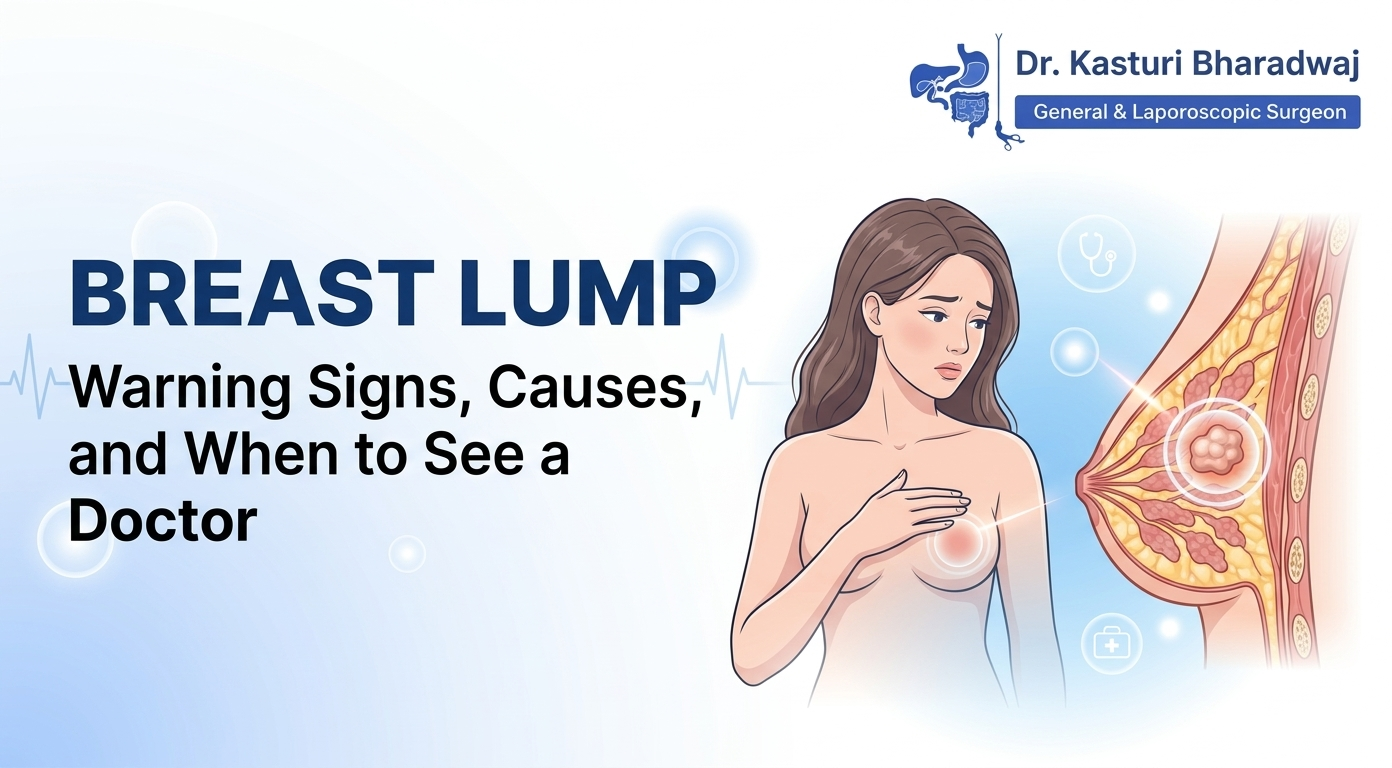
Finding a breast lump can cause immediate anxiety. Many people search “breast lump when to worry” after discovering a small lump during a self-exam or while bathing. The important thing to remember is that not all breast lumps are cancerous.
Breast lumps can occur due to hormonal changes, cysts, infections, or benign tumors such as fibroadenomas. However, some lumps require medical evaluation to rule out serious conditions like Breast Cancer.
Understanding the difference between harmless changes and warning signs can help you decide when to consult a doctor.
Understanding Breast Lumps
A breast lump refers to any localized swelling, thickening, or mass in the breast tissue.
Lumps may feel:
- Soft or firm
- Movable or fixed
- Painful or painless
- Smooth or irregular
They can appear in the breast or sometimes in the armpit area, where lymph nodes are located.
Many women notice temporary lumps during hormonal changes, especially before menstrual periods.
Not Every Lump Is Cancer — But Never Ignore It
One of the biggest misconceptions is that every lump means cancer. In reality, most breast lumps are benign (non-cancerous).
Common benign conditions include:
1. Breast Cysts
Fluid-filled sacs that can fluctuate with the menstrual cycle.
2. Fibroadenoma
A common benign tumor seen in younger women.
Characteristics:
- Smooth
- Round
- Movable under the skin
3. Hormonal Breast Changes
Hormonal fluctuations can cause temporary lumpiness or tenderness.
4. Breast Infection (Mastitis)
Often seen during breastfeeding and may cause redness, warmth, and pain.
Despite these benign causes, persistent lumps should always be examined by a doctor.
Common Causes of Breast Lumps
Several conditions can cause breast lumps.
Benign Causes
- Breast cysts
- Fibroadenomas
- Fat necrosis (after injury)
- Hormonal breast tissue changes
- Infections or abscess
Potentially Serious Causes
Some lumps may indicate early signs of breast cancer.
Risk factors include:
- Family history
- Increasing age
- Hormonal exposure
- Genetic predisposition
Most suspicious lumps require medical evaluation and imaging tests.
Warning Signs That Need Medical Attention
Some breast lump symptoms should not be ignored.
Consult a doctor if you notice:
- A hard lump with irregular edges
- Lump that does not move easily
- Skin dimpling or puckering
- Nipple discharge (especially bloody)
- Persistent breast pain
- Nipple inversion
- Swelling or lump in the armpit
- Redness or warmth around the breast
These symptoms do not always mean cancer, but they require professional evaluation.
When a Lump May Not Be Serious
Certain features suggest the lump may be benign.
Examples include:
- Lump that moves easily under the skin
- Painful lump that appears before periods
- Lump that changes size with menstrual cycle
- Soft or rubbery texture
Even if a lump seems harmless, a clinical examination helps confirm the cause.
How Doctors Evaluate a Breast Lump
Medical evaluation usually follows a step-by-step approach.
1. Clinical Breast Examination
A doctor checks:
- Lump size
- Texture
- Mobility
- Associated skin changes
2. Medical History
Important details include:
- When the lump appeared
- Menstrual cycle relation
- Pain or discharge
- Family history of breast disease
This information helps determine further tests.
Tests Used for Breast Lump Diagnosis
Several imaging and diagnostic tests help identify the nature of a breast lump.
Breast Ultrasound
Often the first test for younger women.
It helps distinguish between:
- Solid lumps
- Fluid-filled cysts
Mammography
Commonly recommended for women above 40 or when suspicious features are present.
Breast Biopsy
If imaging suggests abnormal tissue, a biopsy may be done.
This involves taking a small tissue sample for laboratory analysis.
These tests help determine whether the lump is benign or malignant.
Breast Lump Treatment Options
Treatment depends on the diagnosis.
Observation
Some benign lumps only require monitoring.
Medication
Used for infections or hormonal conditions.
Cyst Drainage
Fluid-filled cysts can sometimes be drained.
Surgical Removal
Surgery may be recommended when:
- The lump grows rapidly
- Diagnosis is uncertain
- Biopsy shows abnormal cells
- The lump causes discomfort
Breast Lump Evaluation & Surgery
When surgery is required, procedures may include:
- Excisional biopsy
- Lumpectomy
- Removal of benign tumors
These procedures are usually performed by a qualified General or Breast Surgeon (MS, General Surgery – placeholder) with several years of experience in breast disease management (experience placeholder).
The goal is accurate diagnosis and safe treatment while preserving healthy tissue whenever possible.
Safety Considerations and Risks
Medical procedures carry some risks.
Possible risks of breast lump evaluation or surgery include:
- Infection
- Bleeding
- Bruising
- Temporary discomfort
- Scarring
Your doctor explains benefits and risks before recommending treatment.
When to Visit a Breast Specialist in Bhubaneswar
If you discover a breast lump that persists for more than a few weeks, becomes painful, or shows concerning features, a medical consultation is recommended.
Conclusion
Discovering a breast lump can be stressful, but many lumps are benign and related to hormonal or non-cancerous conditions.
However, any new or persistent lump should be evaluated to ensure proper diagnosis and peace of mind. If a lump changes in size, becomes painful, or is associated with other symptoms, a clinical assessment helps determine the next steps.


