
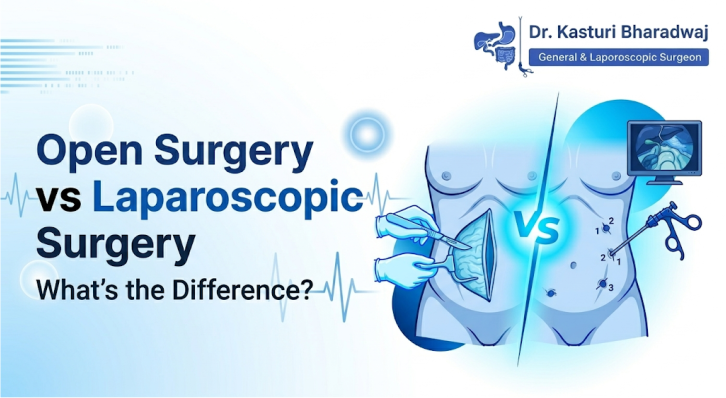
Many patients ask about the open surgery vs laparoscopic surgery difference when doctors recommend a procedure. Understanding both options helps patients make informed decisions and reduces anxiety before surgery.
Open surgery is the traditional method, while laparoscopic surgery uses small incisions and a camera. However, the choice between the two depends on the condition, patient health, and surgical complexity.
In this guide, we explain the differences, benefits, risks, and recovery expectations in a simple and patient-friendly way.
What Is Open Surgery?
Open surgery is the traditional surgical method. In this approach, the surgeon makes a single larger incision to directly access the affected organ.
Key Features
- Larger incision (usually several centimeters)
- Direct visibility of internal organs
- Common in complex or emergency cases
Therefore, doctors often use open surgery when better access and visibility are required.
What Is Laparoscopic Surgery?
Laparoscopic surgery, also called minimally invasive or keyhole surgery, uses small incisions and a camera to perform the procedure.
Key Features
- 2–4 small incisions
- Use of a laparoscope (camera)
- Specialized surgical instruments
- Magnified internal view on a screen
As a result, surgeons can perform precise procedures with minimal tissue damage.
Key Differences Between Open and Laparoscopic Surgery
Comparison Table
| Feature | Open Surgery | Laparoscopic Surgery |
|---|---|---|
| Incision Size | Large incision | Small incisions |
| Pain Level | More post-surgery pain | Less pain |
| Recovery Time | Longer | Faster |
| Hospital Stay | 3–7 days | 1–2 days |
| Scarring | Visible scar | Minimal scars |
| Infection Risk | Higher | Lower |
In general, laparoscopic surgery offers faster recovery and less discomfort. However, it may not be suitable for all patients.
Benefits of Laparoscopic Surgery
Laparoscopic surgery has become increasingly popular due to its advantages.
Key Benefits
- Smaller incisions and minimal scarring
- Reduced pain after surgery
- Faster recovery time
- Shorter hospital stay
- Lower risk of infection
Because of this, many patients return to normal activities sooner compared to open surgery.
When Open Surgery Is Necessary
Although laparoscopic surgery is preferred in many cases, open surgery still plays an important role.
Doctors may recommend open surgery when:
- The condition is severe or complicated
- There is significant internal bleeding
- The organ is difficult to access laparoscopically
- The patient has previous abdominal surgeries (scar tissue)
- Emergency surgery is required
In addition, surgeons may start laparoscopic surgery but switch to open surgery for safety reasons.
Recovery Comparison
Recovery differs significantly between the two approaches.
Laparoscopic Surgery Recovery
- Walking within 24 hours
- Return to normal activity: 1–3 weeks
- Minimal discomfort
Open Surgery Recovery
- Longer hospital stay
- Return to normal activity: 3–6 weeks
- More wound care required
Therefore, laparoscopic surgery usually allows faster healing and less disruption to daily life.
Pain and Scarring Differences
Pain Comparison
- Laparoscopic procedures cause less pain because of smaller incisions
- In contrast, open surgery often results in more discomfort due to larger cuts
Scar Comparison
- These minimally invasive procedures leave small, barely visible scars
- On the other hand, open surgery may leave a noticeable scar
For this reason, many patients prefer minimally invasive surgery when suitable.
Risks and Safety Comparison
Both procedures are generally safe when performed by experienced surgeons. However, each method has specific risks.
Risks of Laparoscopic Surgery
- Injury to nearby organs (rare)
- Gas-related discomfort after surgery
- Not suitable for all complex cases
Risks of Open Surgery
- Higher risk of infection
- Increased blood loss
- Longer healing time
Even so, surgeons choose the safest method based on each patient’s condition.
Which Option Is Right for You?
Choosing between open and laparoscopic surgery depends on several factors.
Doctors Consider:
- Type and severity of the condition
- Patient’s overall health
- Previous surgeries
- Availability of laparoscopic expertise
Therefore, the decision is always personalized rather than one-size-fits-all.
Conclusion
Understanding the open surgery vs laparoscopic surgery difference helps patients feel more confident before undergoing a procedure.
Laparoscopic surgery offers advantages such as faster recovery, less pain, and minimal scarring. However, open surgery remains essential in complex or emergency situations.
If you are facing a surgical decision, discussing your options with a qualified surgeon can help you choose the most appropriate approach for your condition.


