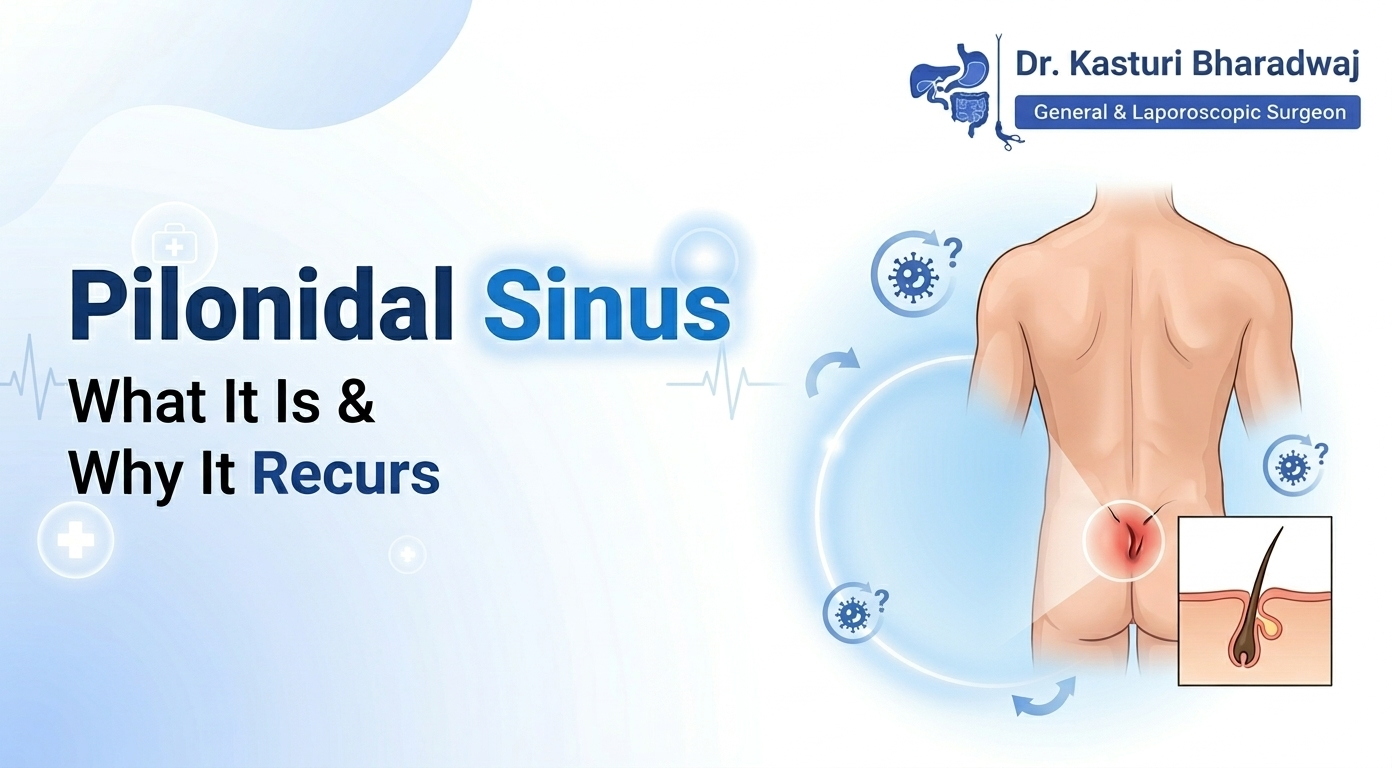
Many patients search what is pilonidal sinus and why it recurs after facing repeated pain or infection near the tailbone. This condition often becomes frustrating because it tends to come back even after treatment.
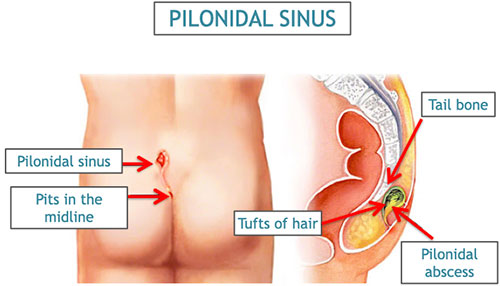
A pilonidal sinus is a small tunnel or tract that develops in the skin near the tailbone (coccyx). It usually contains hair, debris, and infected tissue. However, the main concern is not just the initial infection but the high chance of recurrence.
This article explains the causes, symptoms, recurrence reasons, and treatment options in a clear and patient-friendly way.
What Is Pilonidal Sinus?
Pilonidal sinus is a chronic skin condition that develops in the crease between the buttocks. It often starts as a small cyst or abscess and may later form a sinus tract.


Key Characteristics
- Located near the tailbone area
- Contains hair, pus, or debris
- May cause swelling, pain, and discharge
- Can develop into a recurrent infection
In many cases, it begins when loose hair penetrates the skin and triggers inflammation.
Why Pilonidal Sinus Occurs
Several factors contribute to the formation of pilonidal sinus.
Common Causes
- Hair penetrating the skin
- Friction due to prolonged sitting
- Sweating and poor hygiene
- Tight clothing causing irritation
- Deep natal cleft (skin fold)
As a result, bacteria grow inside the trapped area, leading to infection and abscess formation.
Why Pilonidal Sinus Recurs Frequently
One of the biggest challenges is recurrence. Many patients experience repeated infections even after treatment.
Key Reasons for Recurrence
- Incomplete removal of sinus tract
- Hair re-entering the skin after healing
- Poor hygiene or sweating
- Continued friction in the area
- Delayed or improper wound healing
In addition, if the underlying cause is not addressed, the condition may return.
Risk Factors for Recurrence
Certain factors increase the chances of pilonidal sinus recurrence.
High-Risk Factors
- Prolonged sitting (desk jobs, driving)
- Excess body hair
- Obesity
- Family history
- Repeated local trauma
Therefore, lifestyle plays an important role in both development and recurrence.
Symptoms of Recurrent Pilonidal Sinus
Recognizing early signs helps prevent complications.
Common Symptoms
- Pain near the tailbone while sitting
- Swelling in the buttock cleft
- Pus or blood discharge
- Foul smell from the affected area
- Redness and tenderness
Sometimes, patients may notice repeated abscess formation in the same area.
Treatment Options for Pilonidal Sinus
Treatment depends on severity and recurrence.
1. Non-Surgical Management
- Antibiotics for infection control
- Drainage of abscess
- Regular cleaning and hygiene
However, non-surgical methods may not prevent recurrence in chronic cases.
2. Surgical Treatment
Surgery is often recommended for recurrent or chronic pilonidal sinus.
Common procedures include:
- Excision of sinus tract
- Open wound healing technique
- Flap procedures for complex cases
3. Minimally Invasive (Laser) Treatment
Modern techniques focus on faster healing and less recurrence.
Benefits
- Smaller wounds
- Faster recovery
- Less pain
- Reduced recurrence risk
Because of this, minimally invasive approaches are increasingly preferred when suitable.
Risks and Safety Considerations
Although treatment is generally safe, certain risks exist.
Possible Risks
- Infection
- Delayed wound healing
- Recurrence of sinus
- Post-surgical discomfort
However, proper care and follow-up reduce these risks significantly.
How to Prevent Recurrence
Preventive care plays a key role in long-term management.
Prevention Tips
- Maintain proper hygiene
- Remove excess hair regularly
- Avoid prolonged sitting
- Wear loose-fitting clothes
- Keep the area dry
In addition, following post-treatment instructions carefully reduces recurrence risk.
When to Consult a Specialist in Bhubaneswar
If you experience repeated pain, swelling, or discharge near the tailbone, medical evaluation is important.
Conclusion
Understanding what is pilonidal sinus and why it recurs helps patients manage the condition more effectively.
Although the condition can be uncomfortable and recurring, proper treatment combined with preventive care can significantly reduce future episodes. Therefore, early recognition and appropriate management remain important.


