
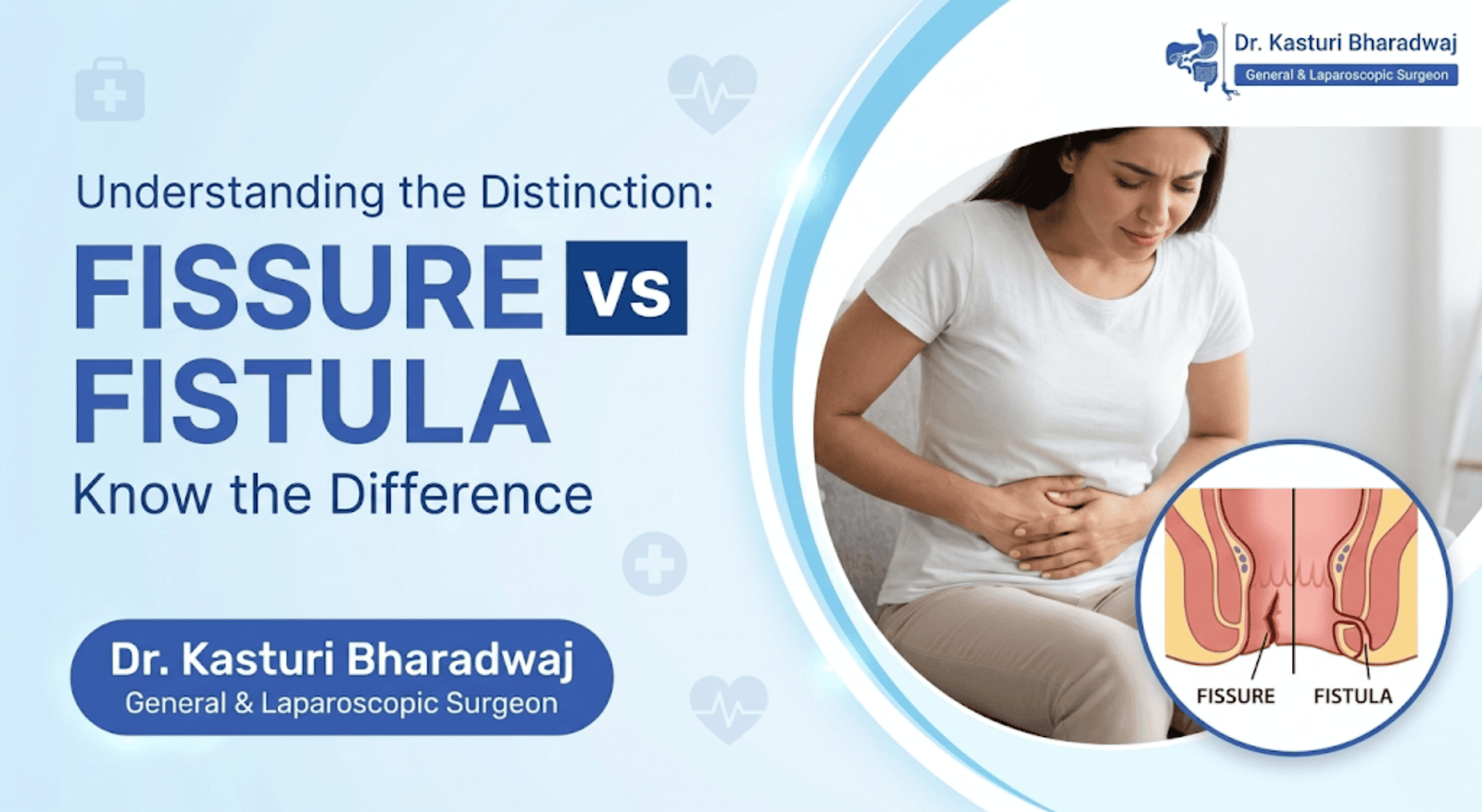
Many patients search for the fissure vs fistula difference because both conditions affect the anal area and cause discomfort. However, they are completely different medical problems that require different treatments.
An anal fissure is a small tear in the skin, while an anal fistula is an abnormal tunnel connecting the anal canal to the skin. Therefore, understanding the difference helps in early diagnosis and proper treatment.
This guide explains the symptoms, causes, treatment options, and when to consult a specialist.
What Is an Anal Fissure?
An anal fissure is a small cut or tear in the lining of the anus. It usually occurs due to trauma during bowel movements.
Key Features
- Sharp pain during or after passing stool
- Bright red bleeding
- Burning sensation
- Spasm of anal muscles
In most cases, fissures develop due to constipation or passing hard stools.
What Is an Anal Fistula?
An anal fistula is a small tunnel that forms between the anal canal and the skin near the anus. It usually develops after an infection or abscess.
- Persistent discharge of pus or fluid
- Swelling and redness
- Recurrent infection
- Pain and discomfort
Key Features
Unlike fissures, fistulas are often chronic and may not heal without medical intervention.
Key Differences Between Fissure and Fistula
Comparison Table
| Feature | Fissure | Fistula |
|---|---|---|
| Nature | Tear in skin | Tunnel between organs |
| Pain | Sharp pain during stool | Dull or continuous pain |
| Discharge | Rare | Common (pus discharge) |
| Cause | Constipation, trauma | Infection or abscess |
| Healing | May heal with medication | Usually needs surgery |
In simple terms, fissure is a tear, whereas fistula is a tract.
Symptoms Comparison
Fissure Symptoms
- Severe pain during bowel movement
- Fresh bleeding
- Burning sensation after stool
- Difficulty passing stool
Fistula Symptoms
- Continuous or intermittent pus discharge
- Swelling near anal area
- Recurrent infections
- Mild to moderate pain
Therefore, pain is more intense in fissure, while discharge is more common in fistula.
Causes and Risk Factors
Both conditions have different causes but may share some risk factors.
Causes of Fissure
- Chronic constipation
- Hard stool passage
- Low fiber diet
- Straining during bowel movements
Causes of Fistula
- Anal abscess
- Infection in anal glands
- Crohn’s disease (in some cases)
- Poor hygiene
As a result, untreated infections can lead to fistula formation.
Treatment Differences
Treatment varies significantly between the two conditions.
Fissure Treatment
- High-fiber diet
- Stool softeners
- Warm sitz baths
- Topical medications
In many cases, fissures heal without surgery.
Fistula Treatment
- Surgical intervention (most cases)
- Laser treatment (minimally invasive option)
- Drainage of infection
Because of its nature, fistula rarely heals on its own and often requires surgery.
Laparoscopic / Laser Treatment Options
Modern treatments offer less pain and faster recovery.
Benefits
- Smaller wounds
- Faster healing
- Less discomfort
- Reduced recurrence risk
Therefore, many patients prefer minimally invasive techniques when appropriate.
When to See a Doctor
It is important to seek medical advice if symptoms persist.
Consult a Doctor If You Have:
- Persistent anal pain
- Recurrent infection or swelling
- Continuous discharge
- Bleeding during bowel movements
Early consultation helps prevent complications and ensures accurate diagnosis.
Risks and Safety Considerations
Both conditions are manageable but may cause complications if untreated.
Possible Risks
- Chronic pain
- Infection spread
- Recurrence
- Abscess formation
However, proper treatment reduces long-term complications.
Conclusion
Understanding the fissure vs fistula difference helps patients identify symptoms early and choose the right treatment.
Fissures usually heal with conservative care, while fistulas often require surgical management. Therefore, recognizing the symptoms and consulting a specialist ensures better outcomes.


