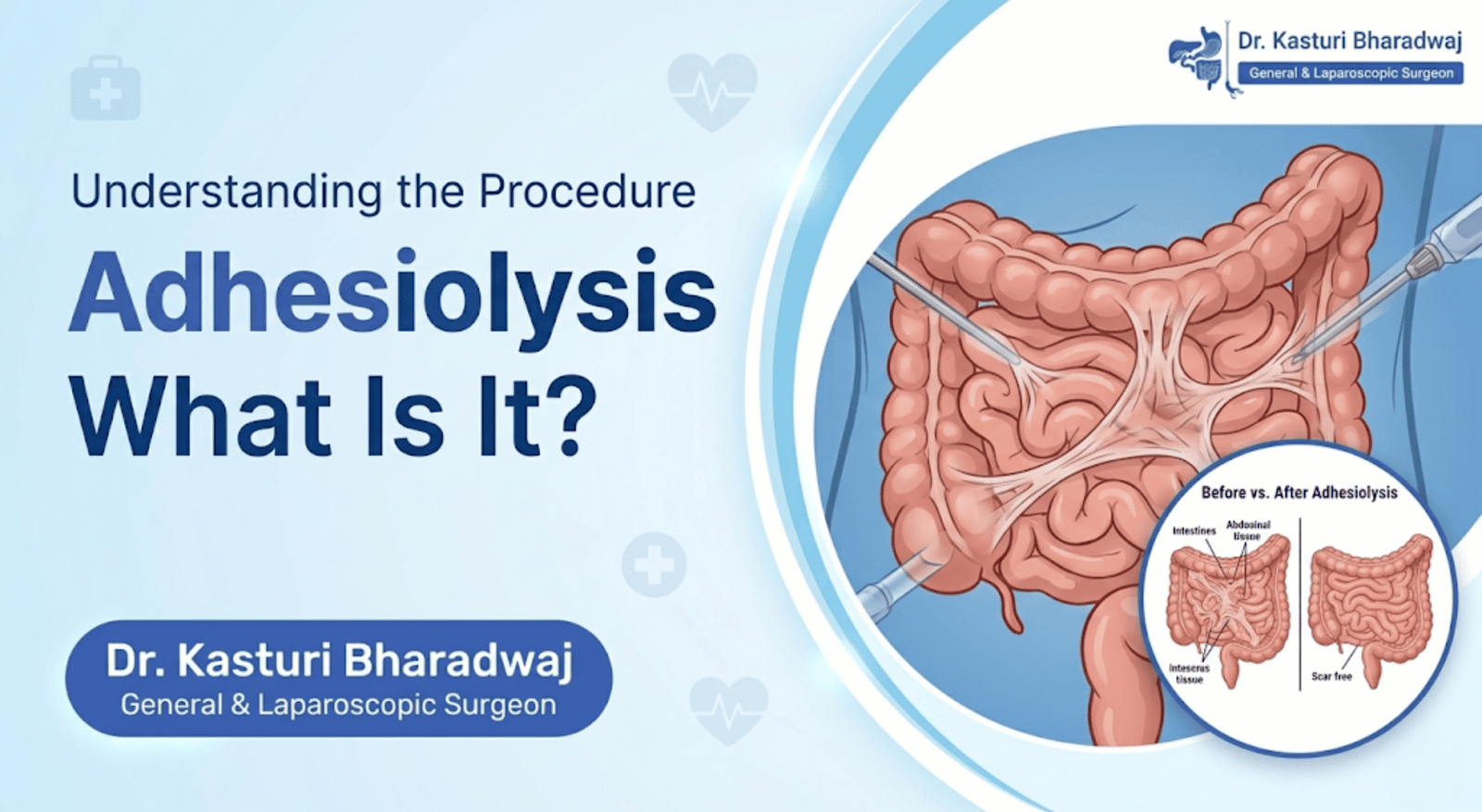
Many patients search what is adhesiolysis after experiencing chronic abdominal pain or complications following surgery. Adhesiolysis is a surgical procedure used to remove internal scar tissue, also known as adhesions.
Adhesions are bands of fibrous tissue that form between organs, often after surgery or infection. However, these tissues can restrict normal organ movement and sometimes cause pain or intestinal blockage.
This article explains adhesiolysis in simple terms, including its purpose, procedure, recovery, and risks.
What Are Abdominal Adhesions?
Abdominal adhesions are internal scar tissues that develop between organs or tissues inside the abdomen.
Key Points
- Form after surgery, infection, or inflammation
- Cause organs to stick together
- May lead to pain or obstruction
- Often develop without noticeable symptoms
In some cases, adhesions remain harmless, but in others, they can cause serious complications.
Why Adhesiolysis Is Needed
Adhesiolysis is performed when adhesions start causing symptoms or complications.
Common Reasons
- Chronic abdominal pain
- Intestinal obstruction (blockage)
- Difficulty in digestion
- Complications after previous surgeries
Therefore, surgery becomes necessary when adhesions interfere with normal organ function.
Symptoms of Adhesions
Symptoms vary depending on the severity and location of adhesions.
Common Symptoms
- Persistent abdominal pain
- Bloating and discomfort
- Nausea or vomiting
- Constipation or bowel obstruction
As a result, untreated adhesions may lead to repeated digestive problems.
How Adhesiolysis Is Performed
Adhesiolysis can be performed using two main techniques.
1. Laparoscopic Adhesiolysis
- Small incisions are made
- A camera (laparoscope) is used
- Specialized instruments remove adhesions
2. Open Adhesiolysis
- A larger incision is made
- Direct access to abdominal organs
- Used in complex cases
In most cases, doctors prefer laparoscopic surgery because it reduces tissue damage and speeds up recovery.
Laparoscopic vs Open Adhesiolysis
| Feature | Laparoscopic | Open Surgery |
|---|---|---|
| Incisions | Small | Large |
| Recovery | Faster | Slower |
| Pain | Less | More |
| Hospital Stay | Shorter | Longer |
However, open surgery may be required in severe or complicated cases.
Recovery After Adhesiolysis
Recovery time depends on the type of surgery and patient health.
Typical Recovery
- Laparoscopic: 1–2 weeks
- Open surgery: 3–6 weeks
Recovery Tips
- Follow doctor’s instructions
- Avoid heavy activities
- Maintain a healthy diet
- Attend follow-up visits
Meanwhile, most patients gradually return to normal activities after recovery.
Risks and Complications
Like any surgical procedure, adhesiolysis carries certain risks.
Possible Risks
- Infection
- Bleeding
- Injury to nearby organs
- Recurrence of adhesions
However, experienced surgeons take precautions to minimize these risks.
When to Consult a Specialist in Bhubaneswar
If you experience persistent abdominal pain or symptoms of obstruction, medical evaluation is important.
Conclusion
Understanding adhesiolysis helps patients recognize when surgical treatment may be necessary. It is used to remove internal scar tissue that causes pain or obstruction.
Although not all adhesions require surgery, symptomatic cases may benefit from appropriate treatment. Therefore, consulting a specialist can help determine the best approach.


