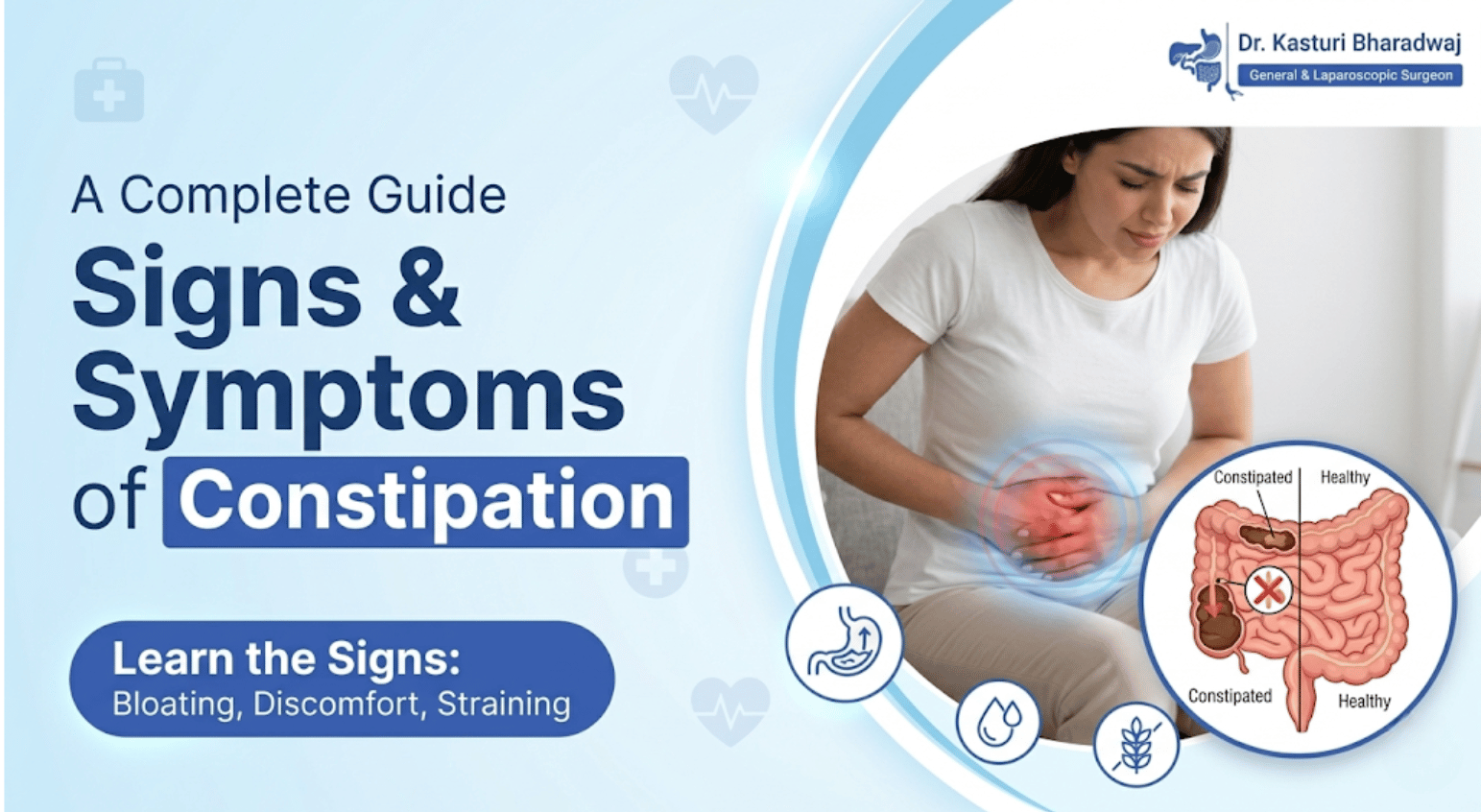
Many people search for symptoms of constipation when they experience difficulty passing stool, bloating, or abdominal discomfort. Constipation is a common digestive problem that affects people of all ages.
Occasional constipation is usually temporary. However, persistent symptoms may indicate chronic constipation or another digestive condition requiring medical evaluation.
This guide explains common constipation symptoms, warning signs, causes, and when to seek medical advice.
What Is Constipation?
Constipation occurs when bowel movements become infrequent or difficult to pass.
Doctors commonly define constipation as:
- Fewer than three bowel movements per week
- Hard or dry stool
- Excessive straining during bowel movement
In addition, constipation may cause discomfort, heaviness, and incomplete bowel emptying.
Common Symptoms of Constipation
Symptoms can vary depending on severity and duration.
Common Signs
- Hard or dry stool
- Difficulty passing stool
- Straining during bowel movement
- Feeling of incomplete bowel emptying
- Bloating and gas
- Abdominal discomfort or heaviness
As a result, many patients experience irritation and digestive discomfort throughout the day.
Early Warning Signs of Chronic Constipation
Occasional constipation often improves with diet and hydration. However, chronic constipation may last for several weeks or recur frequently.
Warning Signs
- Persistent bloating
- Ongoing abdominal pain
- Regular dependence on laxatives
- Feeling constantly unable to empty bowels
- Symptoms lasting several weeks
Therefore, persistent symptoms should not be ignored.
Can Constipation Cause Stomach Pain and Bloating?
Yes. Constipation commonly causes bloating and stomach discomfort.
Why It Happens
- Stool remains in the intestine longer
- Gas builds up in the digestive tract
- Bowel movement slows down
Because of this, patients may feel pressure, heaviness, or cramps in the abdomen.
What Causes Constipation?
Several lifestyle and medical factors contribute to constipation.
Common Causes
- Low fiber diet
- Inadequate water intake
- Lack of physical activity
- Stress and anxiety
- Delaying bowel movements
Medical Causes
- Certain medications
- Hormonal disorders
- Digestive diseases
- Neurological conditions
Meanwhile, chronic constipation may require detailed medical evaluation.
Can Constipation Lead to Piles or Fissure?
Straining repeatedly during bowel movements may increase pressure around the anal area.
Possible Complications
- Anal fissure (small tear near anus)
- Hemorrhoids (piles)
- Painful bowel movements
- Rectal bleeding
Therefore, treating constipation early may reduce these complications.
Foods and Habits That Help Relieve Constipation
Simple dietary changes often improve bowel habits.
Helpful Foods
- Oats and whole grains
- Fruits like papaya and banana
- Green vegetables
- Fiber-rich foods
- Soups and fluids
Healthy Habits
- Drink adequate water
- Exercise regularly
- Avoid delaying bowel movements
- Maintain regular meal timings
As a result, digestion often becomes more regular and comfortable.
When Constipation Becomes Serious
Certain symptoms may indicate severe constipation or another digestive issue.
Seek Medical Attention If You Have:
- Severe abdominal pain
- Vomiting
- Blood in stool
- Sudden unexplained weight loss
- Constipation lasting several weeks
Conclusion
Understanding the symptoms of constipation helps patients recognize when bowel changes may need attention.
Hard stool, bloating, straining, and infrequent bowel movements are common symptoms. However, persistent constipation or severe pain should not be ignored.
If symptoms continue despite diet and hydration changes, consulting a healthcare professional may help identify the appropriate treatment.
FAQs
What are the common symptoms of constipation?
Hard stool, bloating, difficulty passing stool, and fewer bowel movements are common symptoms.
Can constipation cause stomach pain?
Yes. Constipation may cause abdominal discomfort, heaviness, and bloating.
How many days without stool is considered constipation?
Constipation is commonly associated with fewer than three bowel movements per week.
Can constipation lead to piles or fissure?
Yes. Repeated straining may increase the risk of piles and anal fissure.
Does drinking water help constipation?
Adequate hydration helps soften stool and supports smoother bowel movements.
When should constipation be considered serious?
Severe pain, vomiting, bleeding, or prolonged symptoms require medical evaluation.


