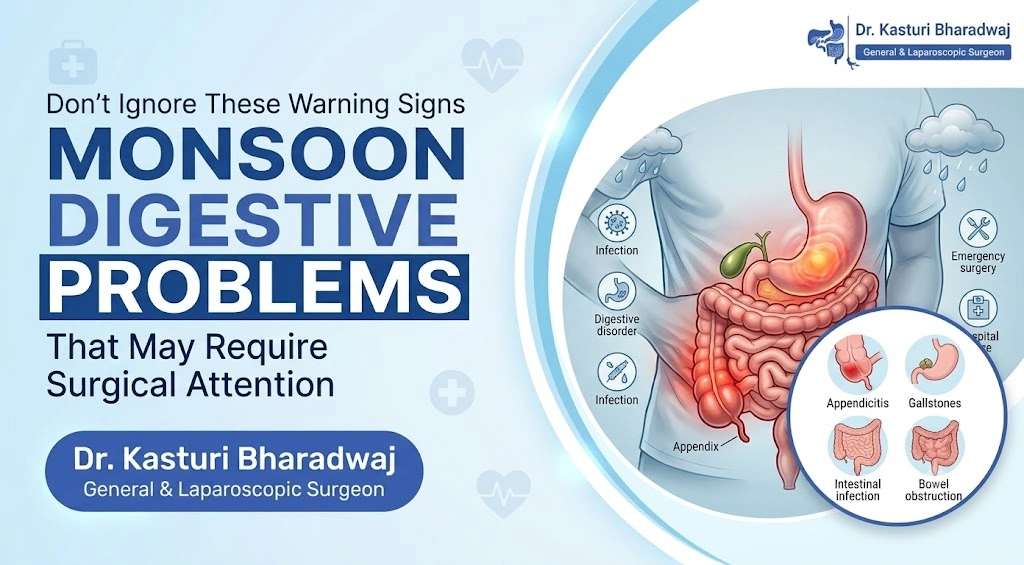
The monsoon season brings welcome relief from the summer heat, but it also increases the risk of monsoon digestive problems. Higher humidity, contaminated food and water, and the rapid growth of bacteria and viruses contribute to a rise in digestive illnesses during the rainy season. While many stomach-related conditions improve with rest, hydration, and medications, some digestive disorders can become serious and may require urgent surgical evaluation.
Knowing the warning signs can help you seek timely medical attention and reduce the risk of complications. This article explains why digestive problems become more common during the monsoon, which conditions may need surgical care, and when you should consult a general surgeon.
Why Do Digestive Problems Increase During the Monsoon?
Monsoon weather creates conditions that encourage the spread of bacteria, viruses, and parasites. Food spoils more quickly in warm and humid environments, while contaminated drinking water becomes a common source of gastrointestinal infections.
Several factors contribute to digestive illnesses during the rainy season, including:
- Eating contaminated or improperly stored food
- Drinking unsafe water
- Reduced food hygiene during travel or outdoor eating
- Increased bacterial and viral growth due to humidity
- Weakened digestion in some individuals during seasonal changes
Most digestive infections cause symptoms such as diarrhea, nausea, vomiting, or mild stomach pain. However, persistent or severe abdominal pain should not be assumed to be a simple stomach infection, as it may indicate a condition requiring surgical treatment.
Common Monsoon Digestive Problems
Many digestive illnesses become more frequent during the rainy season. While some recover with supportive care, others need prompt medical assessment.
Food Poisoning
Food poisoning is one of the most common digestive problems during monsoon. It usually develops after consuming contaminated food or water.
Common symptoms include:
- Nausea
- Vomiting
- Loose stools
- Stomach cramps
- Mild fever
Most cases improve within a few days with adequate hydration and medical guidance. However, severe dehydration, persistent vomiting, or worsening abdominal pain requires immediate medical evaluation.
Viral or Bacterial Gastroenteritis
Gastroenteritis causes inflammation of the stomach and intestines due to viral or bacterial infections.
Symptoms may include:
- Frequent diarrhea
- Vomiting
- Fever
- Loss of appetite
- Abdominal discomfort
While many infections resolve without surgery, severe dehydration or complications may require hospital-based treatment.
Constipation and Digestive Slowdown
Changes in diet, reduced physical activity, dehydration, and certain medications can worsen constipation during the rainy season. Persistent constipation associated with severe abdominal pain or inability to pass stool or gas may indicate a more serious condition that requires urgent evaluation.
Digestive Conditions That May Require Surgical Attention
Not every stomach ache requires surgery. However, some digestive conditions need timely surgical consultation to prevent complications.
Appendicitis
Appendicitis occurs when the appendix becomes inflamed. It is one of the most common causes of emergency abdominal surgery.
Early symptoms may resemble indigestion or stomach infection, making diagnosis difficult without medical evaluation.
Common symptoms include:
- Pain that often begins around the navel and gradually shifts to the lower right side of the abdomen
- Fever
- Nausea or vomiting
- Loss of appetite
- Pain that becomes worse while walking or coughing
If left untreated, the appendix can rupture, leading to infection within the abdominal cavity. In many cases, laparoscopic appendectomy is performed to remove the inflamed appendix.
Gallbladder Disease
Gallstones can remain silent for years, but they may suddenly block the bile ducts and trigger severe pain.
Typical symptoms include:
- Sharp pain in the upper right abdomen
- Pain after eating fatty meals
- Nausea
- Vomiting
- Fever in some cases
Inflammation or infection of the gallbladder may require surgical removal, especially if symptoms are recurrent or complications develop.
Intestinal Obstruction
An intestinal obstruction occurs when food and digestive contents cannot pass normally through the intestines.
Possible warning signs include:
- Severe abdominal pain
- Abdominal swelling
- Persistent vomiting
- Inability to pass stool
- Inability to pass gas
This condition can become life-threatening if blood supply to the intestine is affected. Immediate hospital assessment is essential.
Complicated Abdominal Infections
Some digestive infections extend beyond the stomach or intestines and spread into the abdominal cavity. These infections may lead to abscess formation or inflammation requiring drainage or surgical intervention.
Symptoms may include:
- High fever
- Severe abdominal tenderness
- Persistent vomiting
- Increasing abdominal swelling
- General weakness
Prompt diagnosis using blood tests and imaging studies helps determine the most appropriate treatment.
Warning Signs You Should Never Ignore
Although many digestive illnesses improve with conservative treatment, certain symptoms require urgent medical evaluation.
Seek immediate medical attention if you experience:
- Severe or worsening abdominal pain
- Pain lasting several hours without improvement
- Pain in the lower right abdomen
- Pain in the upper right abdomen after meals
- Persistent vomiting
- Blood in stool or vomit
- High fever with abdominal pain
- Abdominal swelling
- Difficulty passing stool or gas
- Fainting, dizziness, or signs of dehydration
These symptoms do not always indicate surgery, but they should be evaluated promptly to identify the underlying cause.
When Should You Consult a General Surgeon?
You should consider consulting a general surgeon if:
- Abdominal pain is severe or progressively worsening
- Imaging suggests appendicitis, gallbladder disease, or intestinal obstruction
- Symptoms do not improve despite appropriate medical treatment
- Your physician recommends surgical evaluation
- You experience recurrent attacks of gallbladder pain
- There are signs of abdominal infection or complications
How Laparoscopic Surgery Helps in Digestive Emergencies
Many digestive conditions can now be managed using laparoscopic (keyhole) surgery when appropriate.
Potential advantages include:
- Smaller incisions
- Less postoperative discomfort
- Reduced blood loss in suitable cases
- Lower risk of wound-related complications
- Shorter hospital stay for many patients
- Faster return to daily activities, depending on the individual’s condition and recovery
However, laparoscopic surgery may not be suitable for every patient. The choice of surgical approach depends on the diagnosis, severity of the condition, overall health, and the surgeon’s clinical assessment.
Tips to Reduce the Risk of Monsoon Digestive Illness
Simple preventive measures can help lower the risk of digestive infections during the rainy season:
- Drink clean, safe, or boiled water.
- Wash hands thoroughly before eating and after using the restroom.
- Eat freshly prepared, well-cooked meals.
- Avoid raw or undercooked street food during heavy rains.
- Wash fruits and vegetables properly before consumption.
- Store cooked food safely and refrigerate leftovers promptly.
- Maintain good kitchen hygiene.
- Seek medical advice if digestive symptoms persist or worsen.
Conclusion
Monsoon digestive problems are common, but not every stomach ache is harmless. Conditions such as appendicitis, gallbladder disease, intestinal obstruction, and complicated abdominal infections may require timely surgical evaluation to prevent serious complications.
If you develop severe abdominal pain, persistent vomiting, fever with stomach pain, or other concerning symptoms, seek medical assessment without unnecessary delay. A proper diagnosis is essential to determine whether treatment involves medication, observation, or surgery. Early evaluation by a qualified healthcare professional helps ensure that patients receive the most appropriate care based on their individual condition.
Medical Disclaimer
This article is intended for general educational purposes only and should not be considered a substitute for professional medical advice, diagnosis, or treatment. Digestive symptoms can have many possible causes, and only a qualified healthcare professional can determine the underlying condition after appropriate evaluation. If you experience severe abdominal pain, persistent vomiting, high fever, blood in the stool, difficulty passing stool or gas, or any rapidly worsening symptoms, seek prompt medical care. Always consult a qualified doctor or surgeon regarding concerns about your health or before making decisions about medical treatment.
Frequently Asked Questions
1. Why do digestive problems increase during the monsoon?
Digestive problems become more common during the monsoon because high humidity and rainfall promote the growth of bacteria, viruses, and parasites. Contaminated food, unsafe drinking water, and poor food hygiene can increase the risk of food poisoning and gastrointestinal infections.
2. Can food poisoning require surgery?
Most cases of food poisoning improve with hydration, rest, and medical treatment. However, severe abdominal pain caused by conditions such as appendicitis, gallbladder disease, or intestinal obstruction may initially resemble food poisoning. A medical evaluation is important if symptoms are severe or persistent.
3. How do I know if abdominal pain is serious?
Seek prompt medical attention if abdominal pain is severe, worsens over time, is associated with fever, persistent vomiting, blood in the stool, abdominal swelling, or difficulty passing stool or gas. These symptoms may indicate a condition requiring urgent treatment.
4. Can appendicitis feel like a stomach infection?
Yes. Early appendicitis may begin with vague stomach discomfort, nausea, or loss of appetite, making it difficult to distinguish from a stomach infection. As the condition progresses, the pain often shifts to the lower right side of the abdomen and becomes more intense.
5. When should I consult a general surgeon for stomach pain?
A surgical consultation may be recommended if imaging or clinical evaluation suggests appendicitis, gallbladder disease, intestinal obstruction, or another condition that may require surgery. Your physician can advise whether referral to a general surgeon is appropriate.
6. Is laparoscopic surgery safe for digestive conditions?
Laparoscopic surgery is a widely used minimally invasive technique for many digestive conditions. Whether it is suitable depends on the diagnosis, severity of the disease, and the patient’s overall health. Your surgeon will determine the most appropriate treatment approach.


