
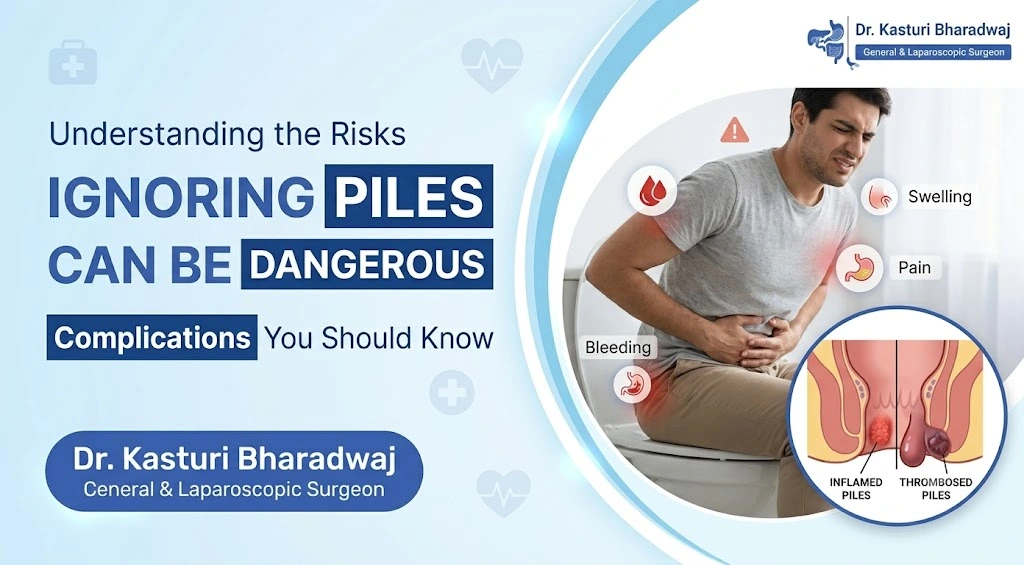
Piles, also known as hemorrhoids, are swollen blood vessels in the lower rectum or around the anus. While many mild cases improve with dietary changes, hydration, and healthy bowel habits, complications of untreated piles can develop if symptoms persist or worsen. If you are wondering whether ignoring piles can be dangerous, the answer is that in some cases it can lead to significant discomfort and medical problems requiring intervention.
What Are Piles?
Piles are broadly classified into:
- Internal piles, which develop inside the rectum and may bleed without causing pain.
- External piles, which form around the anus and may cause pain, itching, or swelling.
Common symptoms include:
- Bleeding during bowel movements
- Anal itching or irritation
- Pain or discomfort while sitting
- Swelling or a lump near the anus
- Mucus discharge
- Prolapse of tissue outside the anus
Can Ignoring Piles Be Dangerous?
Many early-stage piles can be managed conservatively under medical guidance. However, delaying evaluation may allow symptoms to progress. The dangers of untreated hemorrhoids depend on their severity, duration, and underlying causes.
Persistent rectal bleeding should never be assumed to be caused only by piles, as other gastrointestinal conditions may require investigation.
Common Complications of Untreated Piles
1. Chronic Bleeding
Repeated bleeding during bowel movements may occur with internal hemorrhoids. Although bleeding is often mild, ongoing blood loss over time may contribute to iron deficiency anemia in some individuals.
2. Prolapsed Piles
As hemorrhoids enlarge, they may protrude outside the anal opening. Initially they may retract on their own, but advanced prolapse may require manual reduction or medical treatment.
Symptoms include:
- Visible tissue outside the anus
- Discomfort while walking or sitting
- Mucus leakage
- Difficulty maintaining hygiene
3. Thrombosed External Hemorrhoids
Sometimes a blood clot forms within an external hemorrhoid, leading to sudden severe pain and swelling. The affected area may appear bluish or purple and can become extremely tender.
4. Persistent Pain and Reduced Quality of Life
Untreated piles may interfere with routine activities, exercise, prolonged sitting, and bowel movements, affecting daily comfort and productivity.
5. Local Inflammation and Irritation
Repeated friction, moisture, and mucus discharge may lead to ongoing itching, skin irritation, and inflammation around the anus.
6. Hygiene Difficulties
Large prolapsed piles may make cleaning after bowel movements more difficult, increasing discomfort and irritation.
Warning Signs That Should Not Be Ignored
Medical evaluation is advisable if you experience:
- Heavy or recurrent rectal bleeding
- Severe pain around the anus
- Rapidly increasing swelling
- Persistent prolapse
- Symptoms lasting despite home care
- Changes in bowel habits
- Unexplained weight loss
- Fever or signs of infection
- Black stools or significant blood loss
How Are Piles Diagnosed?
Diagnosis typically begins with a medical history and physical examination. Depending on symptoms, the doctor may recommend:
- Visual inspection
- Digital rectal examination
- Anoscopy
- Additional investigations when rectal bleeding requires exclusion of other conditions
A proper evaluation helps distinguish piles from fissures, fistulas, polyps, or colorectal disorders.
Treatment Options for Piles
Treatment depends on symptom severity and examination findings.
Conservative Management
- High-fiber diet
- Adequate fluid intake
- Regular exercise
- Avoiding prolonged straining
- Stool-softening measures when appropriate
- Medications recommended by a healthcare professional
Minimally Invasive Procedures
Certain patients may benefit from office-based treatments or minimally invasive interventions when conservative therapy is insufficient.
Surgical Treatment
Advanced, prolapsed, or complicated hemorrhoids may require surgery. In selected cases, laser-assisted procedures or other surgical techniques may be considered based on clinical assessment and patient suitability.
Not every patient with piles requires surgery, and treatment decisions should be individualized.
Tips to Reduce the Risk of Complications
Healthy lifestyle measures can lower the likelihood of progression:
- Eat fiber-rich foods daily.
- Drink sufficient water.
- Avoid prolonged constipation.
- Do not delay bowel movements.
- Limit excessive straining.
- Stay physically active.
- Maintain a healthy body weight.
- Seek medical advice if symptoms persist or worsen.
Conclusion
Piles are common, but persistent symptoms should not be ignored. Although many mild cases respond to conservative measures, untreated hemorrhoids may lead to bleeding, prolapse, thrombosis, pain, and reduced quality of life. If symptoms continue or interfere with daily activities, consult a qualified medical professional for an accurate diagnosis and individualized treatment plan.
Medical Disclaimer: This article is intended for educational purposes only and should not replace professional medical advice, diagnosis, or treatment. Always consult a qualified healthcare provider regarding persistent rectal bleeding, severe pain, or other concerning symptoms.
FAQs (Schema Type: FAQPage)
1. What happens if piles are left untreated?
Some mild cases remain stable or improve, but untreated piles may enlarge and cause bleeding, prolapse, pain, or thrombosis, depending on severity.
2. Can piles become dangerous?
While many hemorrhoids are not life-threatening, persistent bleeding, severe pain, or prolapse should be medically evaluated to prevent complications and rule out other conditions.
3. Can untreated piles cause anemia?
Chronic blood loss from recurrent bleeding may contribute to iron deficiency anemia in certain patients, although this is not common in every case.
4. Can piles become infected?
Infection is uncommon but irritation and inflammation can occur. Severe pain, fever, or unusual discharge should be assessed by a healthcare professional.
5. Do piles increase in size over time?
They may enlarge if contributing factors such as chronic constipation or repeated straining continue.
6. Is surgery necessary for advanced piles?
Not always. Treatment depends on the grade of hemorrhoids, symptoms, and response to conservative management. Some advanced cases may benefit from surgical intervention.
7. Is bleeding from piles always harmless?
No. Although hemorrhoids commonly cause bleeding, rectal bleeding can also result from other gastrointestinal conditions and should be properly evaluated.
8. Can laser treatment be used for piles?
Laser-assisted techniques may be suitable for selected patients, but the best treatment depends on individual clinical findings and should be decided after medical evaluation.


