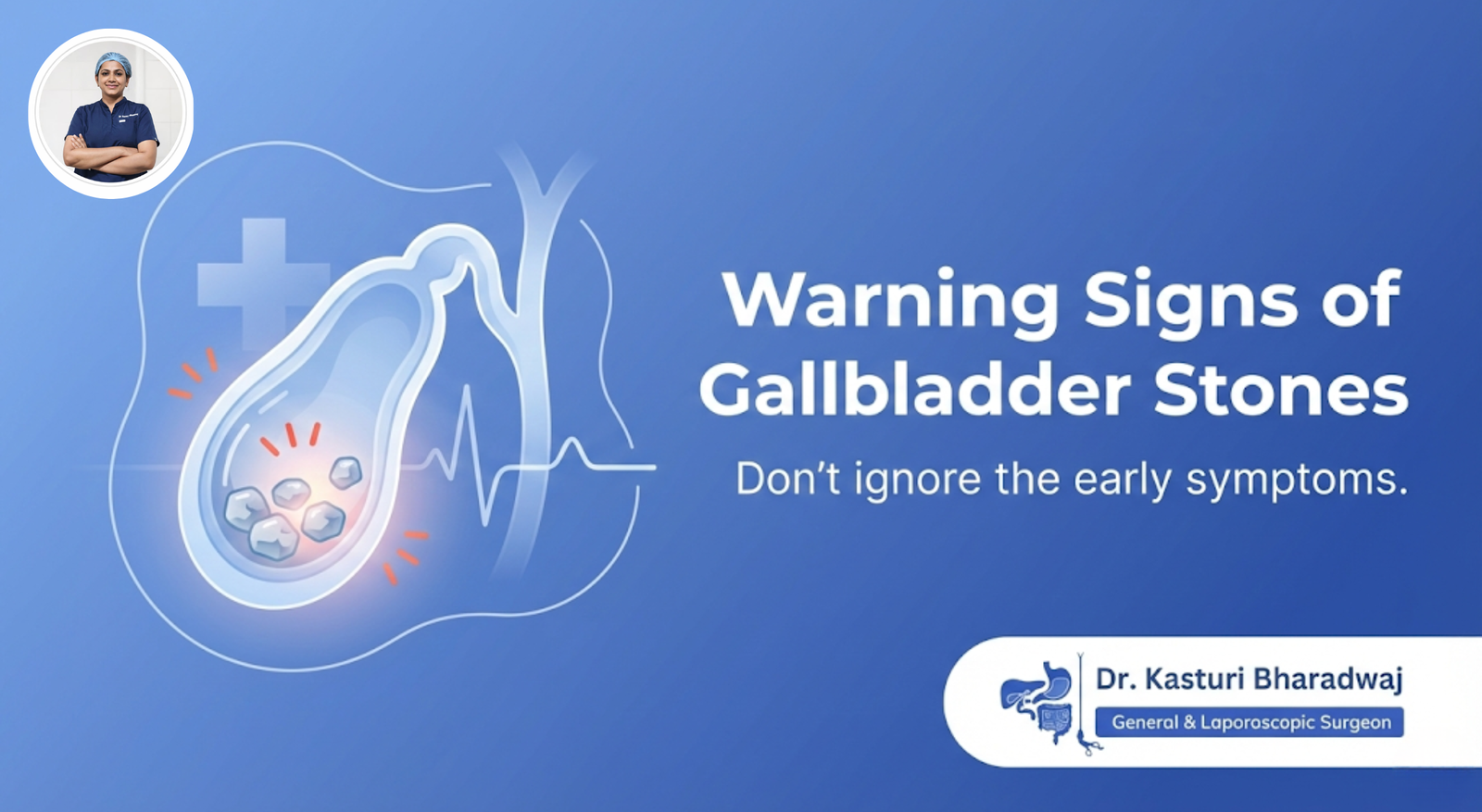
The warning signs of gallbladder stones often begin subtly — mild right-side abdominal discomfort, bloating after meals, or nausea that comes and goes. Many people ignore these early symptoms until pain becomes severe.
Gallbladder stones (gallstones) can remain silent for years. However, when they block the bile duct or irritate the gallbladder, they can cause sudden and intense pain. Understanding the early red flags helps prevent complications like infection or bile duct blockage.
This guide explains the symptoms, risks, diagnosis, and when to consult a specialist in Bhubaneswar.
What Are Gallbladder Stones?
Gallbladder stones are hardened deposits that form inside the gallbladder, a small organ located under the liver on the right side of the abdomen.
They usually develop due to:
- Excess cholesterol in bile
- Improper bile emptying
- Rapid weight loss
- Hormonal factors (more common in women)
Medical term: Cholelithiasis (gallstones)
Not all stones cause symptoms. Many are discovered during ultrasound done for other reasons.
Early Warning Signs of Gallbladder Stones
The early warning signs of gallbladder stones may be mild and mistaken for gas or acidity.
1. Right Upper Abdominal Pain
- Pain under the right rib cage
- May start suddenly
- Can last 30 minutes to several hours
2. Pain After Fatty Meals
One of the most common triggers.
Fatty foods stimulate bile release. If a stone blocks the bile duct, pressure builds up and causes pain.
3. Pain Radiating to Back or Right Shoulder
Gallstone pain may travel to:
- Upper back
- Right shoulder blade
4. Nausea and Vomiting
Especially after heavy or oily meals.
5. Bloating and Indigestion
Feeling full quickly or discomfort after eating small meals.
6. Gallstone Pain at Night
Many patients report sudden severe pain late at night after dinner.
That Right-Side Pain After Meals – Why It Happens
After eating fatty food:
- The gallbladder contracts.
- Bile is released to digest fats.
- If a stone blocks the duct, bile cannot flow properly.
- Pressure builds up → sharp pain (biliary colic).
This explains why pain:
- Worsens after meals
- Occurs in episodes
- Improves temporarily between attacks
If pain persists beyond 4–6 hours, it may signal inflammation (cholecystitis).
When Is It an Emergency?
Some symptoms require urgent medical attention.
Seek emergency care if you experience:
- Severe pain lasting more than 6 hours
- Fever with chills
- Yellowing of eyes or skin (jaundice)
- Persistent vomiting
- Sudden worsening abdominal pain
These may indicate:
- Gallbladder infection
- Blocked bile duct
- Pancreatitis
Ignoring these signs increases complication risk.
Gallstone Pain vs Gas Pain – How to Differentiate
| Gallstone Pain | Gas/Acidity Pain |
|---|---|
| Right upper abdomen | Central or upper abdomen |
| Triggered by fatty meals | Triggered by irregular eating |
| May radiate to shoulder | Rarely radiates |
| Severe, gripping pain | Burning sensation |
| May cause fever | Usually no fever |
If pain repeatedly occurs after meals on the right side, gallstones should be evaluated.
How Gallstones Are Diagnosed
Diagnosis is usually straightforward.
Ultrasound Scan
Most common and reliable test.
Blood Tests
Check for:
- Infection
- Liver function
- Bile duct blockage
Advanced Imaging (if needed)
CT scan or MRCP in complicated cases.
Ultrasound can detect stones effectively in most patients.
Treatment Options
Treatment depends on symptoms.
1. No Symptoms (Silent Stones)
Often monitored without surgery.
2. Mild Recurrent Pain
Surgical removal is usually recommended to prevent complications.
3. Complicated Gallstones
Urgent surgical intervention may be required.
Medications to dissolve stones are rarely effective and not commonly used.
Laparoscopic Cholecystectomy – Safe & Effective Solution
The standard treatment for symptomatic gallstones is laparoscopic cholecystectomy (minimally invasive gallbladder removal).
Procedure features:
- Small keyhole incisions
- Short hospital stay
- Faster recovery
- Minimal scarring
Most patients resume routine activity within 1–2 weeks.
Risks (as with any surgery):
- Bleeding
- Infection
- Bile duct injury (rare)
- Temporary digestive changes
Surgery safety depends on overall health and surgeon experience.
Recovery After Gallbladder Removal
Most patients:
- Start walking same day
- Resume light diet within 24 hours
- Return to work in 7–14 days
Some may experience temporary:
- Loose motions
- Mild digestive changes
These usually improve over time.
When to Consult a Specialist in Bhubaneswar
If you experience repeated right-side pain after meals, nausea, or ultrasound-confirmed stones, surgical evaluation may be appropriate.
Evaluation is performed by a qualified General & Laparoscopic Surgeon (MS, General Surgery – placeholder), with years of experience in minimally invasive procedures (experience placeholder).
If your pain keeps recurring or interferes with daily life, a structured surgical consultation helps clarify the next steps.
Risks of Delaying Gallstone Treatment
Untreated symptomatic gallstones may lead to:
- Acute cholecystitis
- Bile duct obstruction
- Pancreatitis
- Recurrent emergency visits
Timely evaluation reduces complication risks.