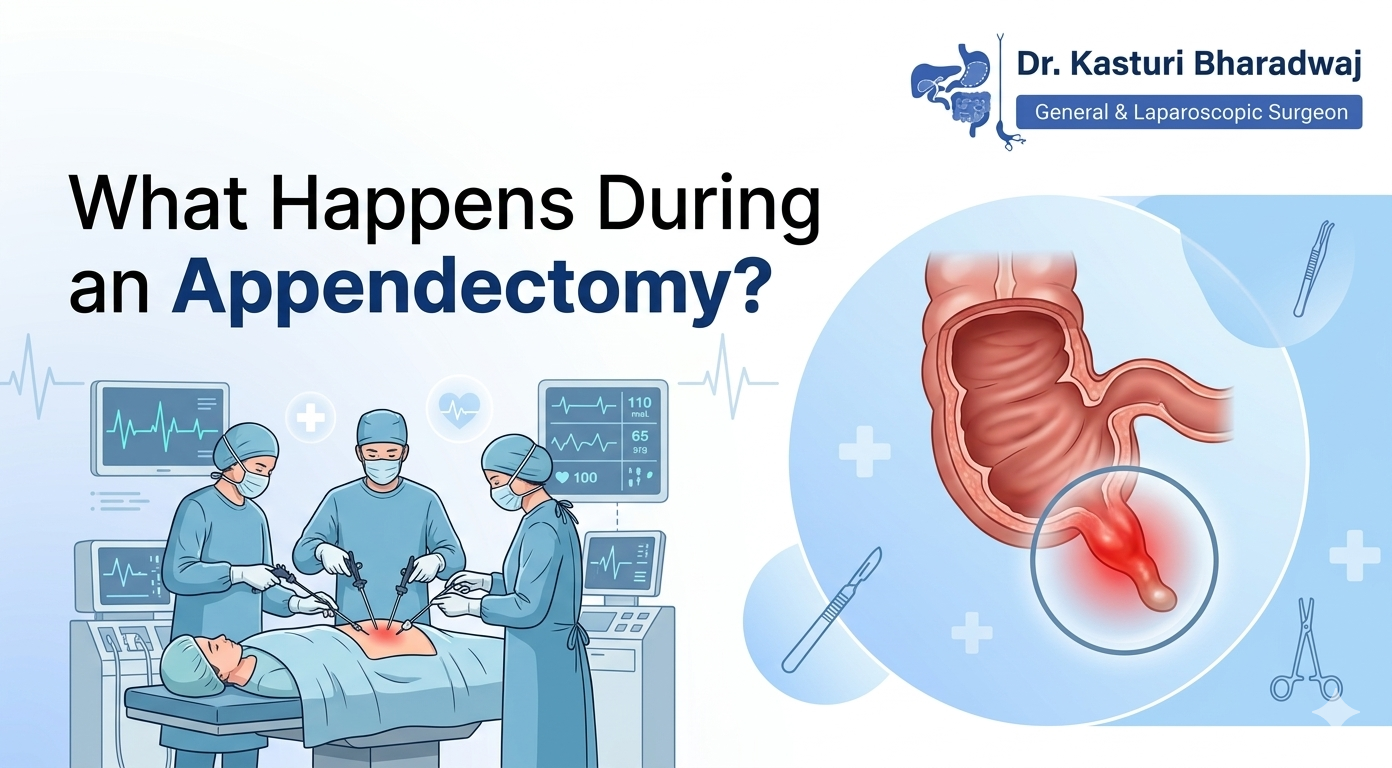
Many patients diagnosed with appendicitis immediately wonder what happens during an appendectomy. Understanding the procedure helps reduce fear and prepares patients for surgery.
An appendectomy is a surgery that removes the inflamed appendix. Doctors usually recommend this procedure quickly because untreated appendicitis can cause the appendix to burst. When that happens, infection can spread inside the abdomen.
Fortunately, modern surgical techniques make appendectomy a common and safe emergency procedure. In most cases, surgeons perform the surgery using minimally invasive laparoscopic methods.
This article explains what happens before surgery, during the appendectomy procedure, and during recovery.
What Is an Appendectomy?
An appendectomy is a surgical procedure used to remove the appendix. The appendix is a small tube attached to the large intestine on the lower right side of the abdomen.
Doctors usually perform this surgery when a patient develops appendicitis, which means the appendix becomes inflamed or infected.
Common symptoms include:
- Severe pain in the lower right abdomen
- Nausea and vomiting
- Fever
- Pain that worsens when walking or coughing
- Loss of appetite
Because appendicitis can worsen quickly, doctors often recommend surgery soon after diagnosis.
Why Appendectomy Is Needed
Appendicitis occurs when the appendix becomes blocked and swollen. This blockage may happen for several reasons.
Common causes include:
- Hardened stool blocking the appendix
- Infection in the digestive tract
- Swollen lymph tissue
- Rare tumors
As pressure builds inside the appendix, bacteria multiply rapidly. As a result, the appendix may rupture if doctors do not treat it quickly.
A ruptured appendix can spread infection inside the abdomen and cause peritonitis, a serious condition. Therefore, removing the appendix prevents dangerous complications.
What Happens Before the Surgery
Before surgery, doctors perform several tests to confirm appendicitis and prepare the patient safely.
Medical Evaluation
Doctors first examine the abdomen and review the patient’s symptoms. In addition, they may recommend imaging tests.
Common diagnostic tests include:
- Blood tests to detect infection
- Ultrasound of the abdomen
- CT scan to confirm inflammation
These tests help surgeons confirm the diagnosis and plan the surgery.
Pre-Surgery Preparation
Once doctors confirm appendicitis, they prepare the patient for surgery.
This preparation usually includes:
- Giving intravenous (IV) fluids
- Providing antibiotics to control infection
- Asking the patient to avoid food or drinks before surgery
Meanwhile, the anesthesiologist reviews the patient’s medical history before administering anesthesia.
Most appendectomies take place under general anesthesia, which means the patient sleeps throughout the procedure.
What Happens During an Appendectomy
The appendectomy procedure usually takes 30 to 60 minutes. However, surgery may take longer if the appendix has already ruptured.
Step-by-Step Appendectomy Procedure
1. First, anesthesia is given
The anesthesiologist gives general anesthesia so the patient remains asleep and pain-free.
2. Next, the surgeon makes small incisions
During laparoscopic surgery, the surgeon creates two to three small cuts in the abdomen.
These small openings allow the surgeon to insert surgical instruments and a tiny camera called a laparoscope.
3. Then, the surgeon locates the appendix
The laparoscope sends images to a monitor. As a result, the surgeon can clearly see the inflamed appendix inside the abdomen.
4. After that, the surgeon removes the appendix
The surgeon carefully separates the appendix from the surrounding tissue and removes it.
5. Finally, the surgeon closes the incisions
The surgeon closes the small cuts using sutures or surgical glue. Afterward, the medical team places sterile dressings over the wounds.
The removed appendix is usually sent to a laboratory for examination.
Laparoscopic vs Open Appendectomy
Surgeons can perform appendectomy using two main techniques.
Laparoscopic Appendectomy
Most surgeons prefer laparoscopic surgery because it is minimally invasive.
Key features include:
- Two to three small incisions
- Use of a camera and thin instruments
- Smaller scars
- Less postoperative pain
- Faster recovery
Therefore, many patients return home within one or two days after surgery.
Open Appendectomy
Sometimes surgeons perform open surgery instead.
In this procedure, the surgeon makes a larger incision in the lower right abdomen.
Doctors usually choose open surgery if:
- The appendix has already ruptured
- Infection has spread inside the abdomen
- Scar tissue prevents laparoscopic access
Although open surgery works effectively, recovery usually takes slightly longer.
What Happens Immediately After Surgery
After surgery, the medical team moves the patient to a recovery room. Doctors and nurses closely monitor vital signs while the anesthesia wears off.
They check:
- Heart rate
- Blood pressure
- Oxygen levels
- Pain levels
Meanwhile, patients receive medications to control pain and prevent infection.
Most patients begin drinking liquids within several hours after surgery. Later, they gradually return to a normal diet.
Doctors also encourage gentle walking soon after surgery because movement helps prevent blood clots and improves circulation.
Recovery After Appendectomy
Recovery time depends on the type of surgery and the severity of infection.
Laparoscopic Surgery Recovery
Patients usually experience faster healing after laparoscopic appendectomy.
Typical recovery timeline:
- Hospital stay: 1–2 days
- Light activities: within a few days
- Normal activities: 1–3 weeks
Open Surgery Recovery
Recovery from open appendectomy may take longer.
Typical recovery timeline:
- Hospital stay: 2–3 days
- Normal activities: about 3–4 weeks
During recovery, doctors often recommend:
- Avoiding heavy lifting
- Keeping the surgical wound clean
- Following prescribed medications
- Attending follow-up appointments
Risks and Safety Considerations
Appendectomy is a common surgical procedure with a high success rate. However, like any surgery, it carries some risks.
Possible complications include:
- Wound infection
- Bleeding
- Reaction to anesthesia
- Abdominal abscess (rare)
The risk of complications increases if the appendix ruptures before surgery. For this reason, early treatment remains important.
When to Seek Emergency Medical Care
Appendicitis requires urgent medical evaluation. Therefore, people should seek medical care if they experience symptoms such as:
- Severe pain in the lower right abdomen
- Pain that worsens when moving
- Fever with abdominal pain
- Persistent nausea or vomiting
- Sudden worsening abdominal pain
These symptoms may indicate appendicitis and require immediate medical attention.
When to Consult a Surgeon in Bhubaneswar
If abdominal pain becomes severe or persistent, a surgical consultation can help determine the appropriate treatment.