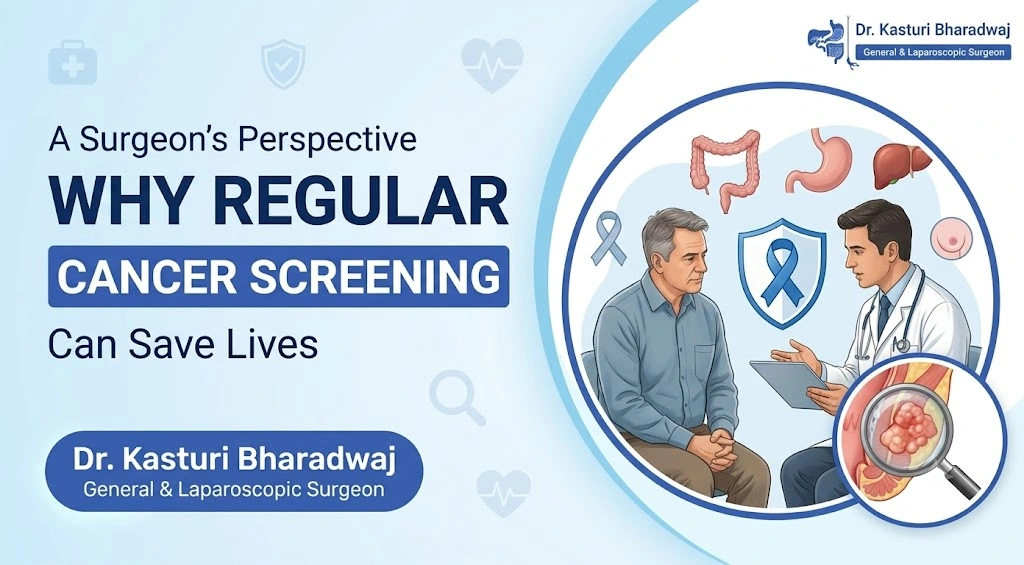
Cancer often develops silently, without causing noticeable symptoms in its early stages. This is why regular cancer screening plays a vital role in preventive healthcare. Screening aims to detect certain cancers or precancerous changes before symptoms appear, when treatment is often simpler and more effective.
Many people assume that feeling healthy means there is no need for screening. However, some cancers can remain undetected until they reach an advanced stage. Routine screening, based on your age, sex, medical history, and individual risk factors, helps identify potential problems earlier and supports timely medical evaluation.
From a surgeon’s perspective, one of the greatest advantages of screening is the opportunity to diagnose disease before it progresses. While not every cancer can be detected through screening, evidence-based screening programs have contributed to earlier diagnosis and improved outcomes for several common cancers.
What Is Cancer Screening?
Cancer screening refers to medical tests performed in people who do not have symptoms to look for early signs of certain cancers or precancerous conditions.
Unlike diagnostic tests, which investigate symptoms that are already present, screening is designed to identify disease at an earlier stage before noticeable health problems develop.
Depending on your age, sex, family history, and personal health profile, your healthcare provider may recommend screening for cancers such as:
- Breast cancer
- Cervical cancer
- Colorectal cancer
- Prostate cancer (for selected individuals after discussion)
- Lung cancer in eligible high-risk individuals
It is important to understand that screening does not diagnose cancer on its own. Instead, it identifies individuals who may require additional evaluation, imaging, or biopsy.
Why Early Cancer Detection Matters
Many cancers progress gradually. During the earliest stages, they may not produce pain, swelling, bleeding, or any obvious warning signs.
This is why early diagnosis through cancer screening has become an essential part of modern preventive medicine.
Detecting cancer before symptoms develop may offer several advantages:
- More treatment options may be available.
- Treatment may be less extensive than in advanced disease.
- Certain precancerous changes can sometimes be treated before cancer develops.
- Earlier intervention may help preserve organ function in selected cases.
- Recovery and long-term management may be more favorable for many patients.
It is important to remember that screening recommendations vary from person to person. A healthcare professional can help determine which tests are appropriate based on your individual risk profile.
Top Reasons Regular Cancer Screening Can Save Lives
1. Cancer Can Develop Without Symptoms
One of the biggest misconceptions is that cancer always causes pain or noticeable illness.
In reality, many cancers remain silent during their earliest stages. A person may feel completely healthy while abnormal cells continue to grow.
Routine screening helps identify these changes before symptoms appear, allowing further evaluation when necessary.
2. Earlier Detection Often Means Simpler Treatment
When cancer is identified early, treatment planning may be less complex than it would be after the disease has spread.
Depending on the type and stage of cancer, early detection may reduce the need for more extensive surgery or multiple treatment approaches.
Although every patient’s situation is unique, diagnosing disease earlier generally provides more management options.
3. Some Screening Tests Detect Precancerous Changes
Certain cancers develop gradually from abnormal or precancerous tissue.
For example, colorectal screening may identify polyps that can sometimes be removed before they become cancerous.
Similarly, cervical screening can detect abnormal cell changes that may require monitoring or treatment.
Not every abnormal finding becomes cancer, but identifying these changes early allows healthcare professionals to recommend appropriate follow-up.
4. Screening Supports Better Long-Term Health Planning
Regular health check-ups encourage individuals to become more aware of their overall health.
During a screening consultation, healthcare providers also assess:
- Family history of cancer
- Lifestyle-related risk factors
- Tobacco or alcohol use
- Obesity
- Previous medical conditions
- Genetic predisposition in selected patients
This comprehensive evaluation helps create a personalized screening plan rather than using a one-size-fits-all approach.
Which Cancers Commonly Have Recommended Screening Tests?
Although screening is not available for every type of cancer, evidence-based recommendations exist for several common cancers.
These include:
Breast Cancer
Mammography is commonly recommended for eligible women based on age and individual risk factors.
Cervical Cancer
Screening with HPV testing and/or Pap tests helps detect abnormal cervical cell changes before cancer develops.
Colorectal Cancer
Colorectal screening may include stool-based tests or colonoscopy depending on age, personal history, and risk level.
Some abnormal growths can be identified and removed during evaluation, reducing the likelihood of progression.
Prostate Cancer
Prostate cancer screening is not recommended for everyone.
Instead, healthcare professionals often recommend shared decision-making based on age, symptoms, family history, and overall health.
Lung Cancer
Low-dose CT screening may be appropriate for selected adults with a significant smoking history who meet established eligibility criteria.
Who Should Consider Regular Cancer Screening?
Not everyone requires the same screening tests or the same screening schedule. Recommendations are based on individual factors rather than a one-size-fits-all approach.
You may benefit from discussing regular cancer screening with your healthcare professional if you:
- Are 40 years or older (screening recommendations vary by cancer type)
- Have a family history of cancer
- Use tobacco or have a history of smoking
- Consume alcohol heavily
- Have obesity or certain long-term medical conditions
- Have previously been diagnosed with precancerous conditions
- Have inherited genetic risk factors
- Have been advised by your doctor to undergo routine preventive screening
Even if you feel healthy, cancer screening before symptoms appear may be appropriate depending on your age, sex, and overall risk profile.
A healthcare professional can recommend the most suitable screening schedule based on nationally accepted guidelines and your personal health history.
What Happens If a Screening Test Is Abnormal?
Receiving an abnormal screening result can understandably be worrying, but it is important to remember that an abnormal screening test does not automatically mean you have cancer.
Screening tests identify people who may need additional evaluation. Many abnormal findings turn out to be non-cancerous after further assessment.
Depending on the screening result, your doctor may recommend:
- A repeat screening test
- Additional imaging
- Blood investigations
- Endoscopy or colonoscopy (when appropriate)
- A biopsy for tissue diagnosis
- Referral to a specialist or surgeon
Further testing helps determine the exact cause of the abnormal finding and whether any treatment is needed.
A Surgeon’s Perspective on Early Detection
As surgeons, we often meet patients after an abnormal screening result or when further evaluation is needed.
One of the most important messages we share is that screening and diagnosis are different.
Screening helps identify individuals who may need additional testing, while diagnosis confirms whether cancer is present.
When cancer is detected at an earlier stage, treatment planning is often more straightforward. Depending on the condition, management may involve surgery, additional investigations, or collaboration with specialists such as medical oncologists, radiation oncologists, gastroenterologists, or gynecologists.
In some cases, surgery may not be necessary at all. The treatment plan always depends on the type of disease, its stage, the patient’s overall health, and current evidence-based recommendations.
Regular screening also allows surgeons to evaluate suspicious findings before they progress, helping patients make informed decisions about their care.
When Should You Consult a Healthcare Professional?
You should consider speaking with a healthcare professional if you:
- Are due for age-recommended cancer screening
- Have a family history of cancer
- Have previously received an abnormal screening result
- Notice persistent changes such as unexplained weight loss, blood in the stool, persistent bleeding, a lump, or long-lasting digestive symptoms
- Have concerns about your personal cancer risk
- Need guidance on which screening tests are appropriate for you
If you are looking for cancer screening in Bhubaneswar or require a surgical evaluation after an abnormal screening report, consulting a qualified healthcare professional can help you understand the next steps based on your individual circumstances.
Conclusion
Regular cancer screening is an important part of preventive healthcare because it aims to detect certain cancers or precancerous conditions before symptoms develop.
Not every cancer can be detected through screening, and no screening test is perfect. However, following evidence-based screening recommendations appropriate for your age and risk factors can support timely medical evaluation when needed.
If you have concerns about your personal risk, family history, or recommended screening schedule, discuss them with a qualified healthcare professional who can guide you toward the most appropriate screening plan for your needs.Medical Disclaimer
Medical Disclaimer
This article is intended for educational and informational purposes only and should not be considered a substitute for professional medical advice, diagnosis, or treatment. Cancer screening recommendations vary depending on factors such as age, sex, personal medical history, family history, and individual risk. Always consult a qualified healthcare professional for advice tailored to your specific health needs. Never ignore professional medical guidance or delay seeking medical attention based on information provided in this article.
Frequently Asked Questions
1. Why is regular cancer screening important?
Regular cancer screening helps detect certain cancers or precancerous changes before symptoms develop. Early identification allows timely medical evaluation and may provide more treatment options, depending on the condition.
2. Can cancer be detected before symptoms appear?
Yes. Some cancers can be identified through recommended screening tests before noticeable symptoms develop. However, not all cancers have effective screening methods.
3. At what age should cancer screening begin?
There is no single age for all cancers. Screening recommendations vary depending on the type of cancer, your age, sex, family history, and personal risk factors. Your healthcare provider can advise the most appropriate schedule.
4. Who should undergo regular cancer screening?
People may benefit from screening based on age, family history, tobacco use, inherited genetic conditions, or other medical risk factors. Screening decisions should be individualized.
5. Is cancer screening painful?
Most screening tests involve little or no discomfort. Some procedures may cause temporary mild discomfort, but healthcare professionals take steps to make the experience as comfortable as possible.
6. Does an abnormal screening test mean I have cancer?
No. An abnormal result only indicates that additional evaluation may be needed. Many abnormal findings are caused by non-cancerous conditions.
7. What is the difference between cancer screening and cancer diagnosis?
Screening is performed in people without symptoms to identify possible abnormalities. Diagnosis involves additional tests, such as imaging or biopsy, to confirm whether cancer is present.
8. Can lifestyle changes replace cancer screening?
Healthy habits such as avoiding tobacco, maintaining a balanced diet, exercising regularly, limiting alcohol intake, and maintaining a healthy weight can help reduce cancer risk. However, these measures do not replace recommended cancer screening.


