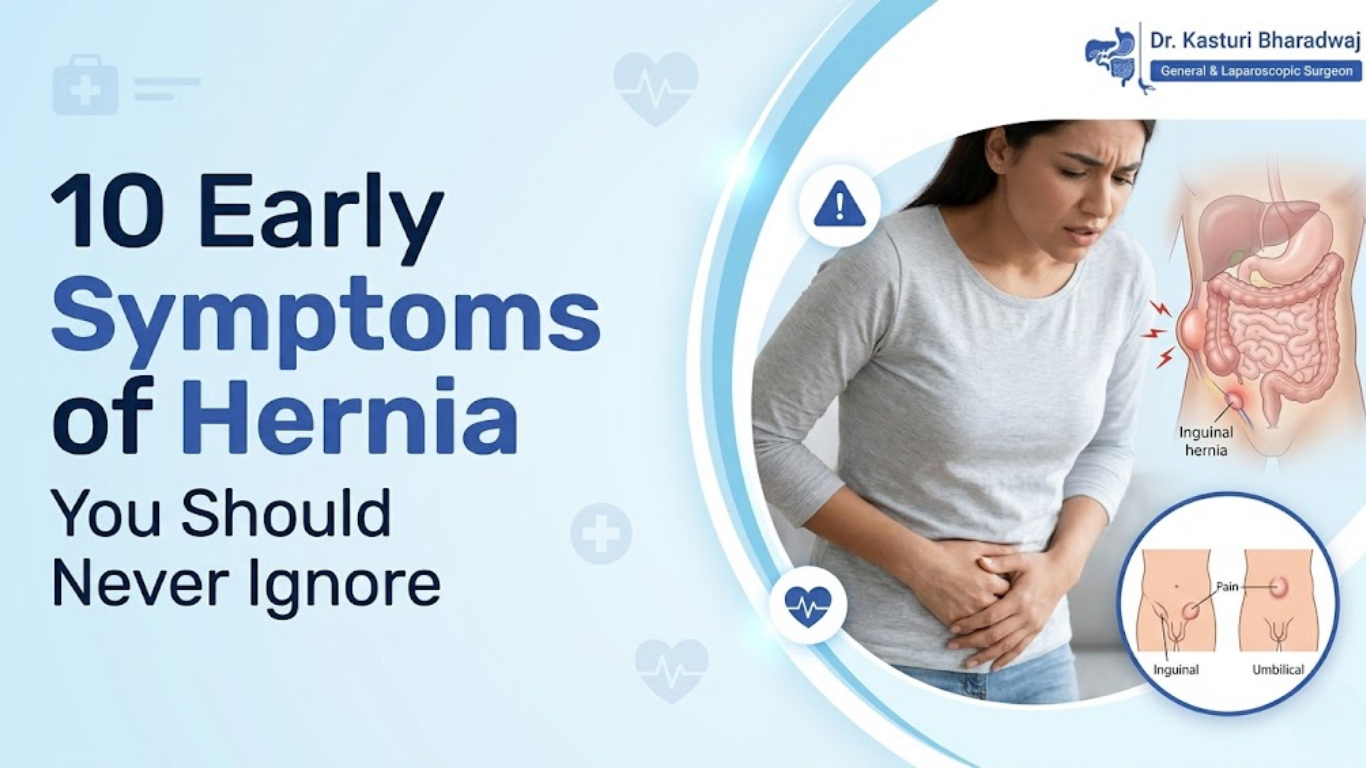
Many people search for the early symptoms of hernia when they notice swelling, discomfort, or pain in the abdomen or groin. Hernias often begin with mild symptoms that may worsen over time if left untreated.
A hernia develops when an internal organ or tissue pushes through a weak area in the muscle wall. Therefore, recognizing symptoms early may help prevent complications.
This guide explains common hernia symptoms, warning signs, diagnosis, and treatment options.
What Is a Hernia?
A hernia occurs when tissue pushes through a weakened muscle or abdominal wall.
Common Types of Hernia
- Inguinal hernia (groin area)
- Umbilical hernia (near belly button)
- Incisional hernia (after surgery)
- Hiatal hernia (upper stomach area)
In many cases, hernias gradually enlarge over time.
10 Early Symptoms of Hernia You Should Never Ignore
1. Visible Lump or Swelling
A soft bulge in the abdomen or groin is one of the most common symptoms.
The swelling may become more noticeable while standing, coughing, or lifting heavy objects.
2. Pain While Lifting or Bending
Many patients feel discomfort during physical activity.
Activities That May Trigger Pain
- Lifting heavy weights
- Bending forward
- Exercising
- Prolonged standing
Because of this, symptoms may worsen during daily work or gym activity.
3. Burning or Aching Sensation
Some hernias cause burning, pressure, or aching near the affected area.
Meanwhile, the discomfort may improve temporarily while lying down.
4. Feeling of Heaviness in the Abdomen
Patients sometimes describe a dragging or heavy sensation in the lower abdomen or groin.
This feeling may increase after prolonged activity.
5. Swelling That Disappears While Lying Down
Reducible hernias may temporarily go back inside when the patient lies flat.
However, this does not mean the hernia has healed.
6. Groin Pain During Coughing or Sneezing
Pressure from coughing or sneezing may increase pain around the hernia.
Therefore, symptoms often become more noticeable during strain.
7. Mild Nausea or Digestive Discomfort
Some abdominal hernias may cause bloating or nausea.
Persistent digestive symptoms should not be ignored.
8. Pain That Comes and Goes
Hernia discomfort may appear intermittently in the early stage.
Symptoms May Fluctuate
- Better during rest
- Worse after activity
- Triggered by physical strain
As a result, some patients delay treatment because symptoms seem temporary.
9. Weakness or Pressure in the Groin
Patients may feel unusual pressure or weakness near the affected area.
This symptom commonly occurs in inguinal hernia.
10. Increasing Pain or Swelling
Pain that gradually worsens may indicate progression of the hernia.
Therefore, worsening symptoms require medical evaluation.
Why Hernia Symptoms Should Not Be Ignored
Untreated hernias may increase in size and become more difficult to treat.
Possible Complications
- Severe pain
- Intestinal obstruction
- Strangulated hernia
- Reduced blood supply to tissue
Fortunately, early treatment often reduces complication risk.
When Hernia Becomes an Emergency
Certain symptoms may indicate a strangulated hernia, which requires urgent medical care.
Emergency Warning Signs
- Severe sudden pain
- Nausea or vomiting
- Red or dark swelling
- Inability to push swelling back
However, not every hernia becomes an emergency. Prompt evaluation helps determine severity.
How Hernia Is Diagnosed
Doctors diagnose hernia through physical examination and imaging if necessary.
Common Diagnostic Methods
- Physical examination
- Ultrasound
- CT scan in selected cases
In addition, doctors assess symptom severity and hernia size before recommending treatment.
Treatment Options for Hernia
Treatment depends on symptoms and hernia type.
Non-Surgical Management
Small hernias with mild symptoms may be monitored temporarily.
Surgical Treatment
- Open hernia repair
- Laparoscopic hernia surgery
- Mesh repair techniques
Because of this, minimally invasive surgery is often preferred for faster recovery.
Conclusion
Recognizing the early symptoms of hernia may help patients seek timely treatment before complications develop.
Visible swelling, groin discomfort, heaviness, and pain during activity are common early signs. However, sudden severe pain or vomiting requires urgent medical attention.
If symptoms continue or worsen, consulting a qualified healthcare professional can help determine the appropriate treatment approach.
FAQs
What are the first signs of a hernia?
A visible lump, groin discomfort, or pain during activity are common early symptoms.
Can hernia pain come and go?
Yes. Early hernia symptoms may appear intermittently and worsen with strain.
Is a small lump always a hernia?
Not always. A medical evaluation helps determine the exact cause.
Can hernia become dangerous if untreated?
Yes. Untreated hernias may enlarge or develop complications such as strangulation.
Does every hernia require surgery?
Not every hernia requires immediate surgery, but symptomatic hernias often need treatment.
Is laparoscopic hernia surgery safe?
Laparoscopic hernia repair is commonly considered safe and allows faster recovery in many patients.


