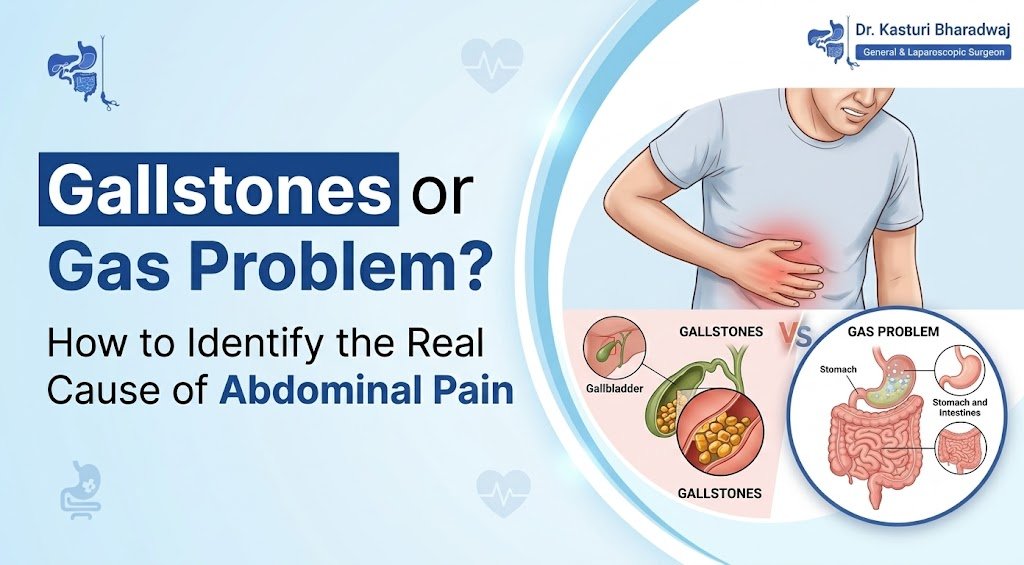
Many people experience abdominal discomfort and wonder whether it is a gallstones or gas problem. Because both conditions can cause bloating, pain, and digestive discomfort, it is easy to confuse one with the other.
However, the location, timing, and pattern of pain often provide important clues. Understanding these differences can help patients know when simple digestive discomfort may require further medical evaluation.
This guide explains how to distinguish gallstone pain from gas pain, when abdominal symptoms should not be ignored, and what treatment options may be available.
Why Abdominal Pain Is Often Confused With Gas
Gas buildup in the digestive tract can cause discomfort, bloating, and cramping. Similarly, gallstones may produce abdominal pain, nausea, and digestive symptoms after meals.
Because both conditions affect digestion, many people initially assume gallstone symptoms are simply “gas.”
However, several important differences can help identify the likely cause.
What Are Gallstones?
Gallstones are hardened deposits that form inside the gallbladder.
The gallbladder stores bile, which helps digest fats. When gallstones block the normal flow of bile, pain and inflammation may occur.
Common Risk Factors
- High-fat diet
- Obesity
- Family history
- Increasing age
- Female gender
- Rapid weight loss
Not all gallstones cause symptoms. However, symptomatic gallstones often produce recurring pain episodes.
Common Symptoms of Gas Problems
Gas-related discomfort usually occurs due to swallowed air, digestive issues, or certain foods.
Symptoms of Gas Pain
- Bloating
- Abdominal fullness
- Burping
- Passing gas
- Cramping discomfort
- Temporary abdominal pressure
In many cases, gas symptoms improve after passing gas or having a bowel movement.
Signs That Suggest Gallstones Instead of Gas
Certain symptoms are more commonly associated with gallstones.
Gallstone Symptoms
- Pain in the right upper abdomen
- Pain after eating oily or fatty foods
- Nausea after meals
- Pain spreading to the back or right shoulder
- Recurring attacks of abdominal pain
- Pain lasting 30 minutes to several hours
Unlike gas discomfort, gallstone pain often does not improve after passing gas.
Key Differences Between Gallstone Pain and Gas Pain
| Feature | Gas Problem | Gallstones |
|---|---|---|
| Pain Location | Anywhere in abdomen | Usually right upper abdomen |
| Pain After Meals | Often temporary | Frequently after fatty meals |
| Bloating | Common | May occur |
| Radiation to Back | Rare | Common |
| Relief After Passing Gas | Usually improves | Usually does not improve |
| Duration | Minutes to hours | Often 30 minutes to several hours |
| Recurring Pattern | Variable | Frequently repeats after meals |
Therefore, pain location and timing often provide important clues.
What Does Gallstone Pain Feel Like?
Many patients describe gallstone pain as:
- Sharp or steady pain under the right ribs
- Pressure-like discomfort
- Pain that increases after eating
- Pain spreading to the back or shoulder blade
Additionally, gallstone attacks often occur at night or after consuming rich meals.
Can Gas Cause Pain on the Right Side?
Yes, trapped gas can sometimes cause pain in different parts of the abdomen, including the right side.
However, gas pain usually changes location and often improves with movement, passing gas, or bowel movements.
Gallstone pain tends to remain more localized and persistent.
When Abdominal Pain Needs Medical Attention
While many digestive complaints are harmless, some symptoms require evaluation.
Consult a Doctor If You Experience
- Recurrent right upper abdominal pain
- Pain after fatty meals
- Persistent nausea or vomiting
- Fever with abdominal pain
- Yellowing of the eyes or skin
- Severe abdominal pain lasting several hours
These symptoms may indicate gallstones or gallbladder-related complications.
How Gallstones Are Diagnosed
Doctors may recommend:
Diagnostic Tests
- Physical examination
- Ultrasound of the abdomen
- Blood tests
- Additional imaging when necessary
Ultrasound is commonly used because it can identify gallstones quickly and accurately.
Treatment Options for Gallstones
Treatment depends on symptoms and clinical findings.
Observation
Gallstones without symptoms may not require immediate treatment.
Surgical Treatment
Patients with recurring symptoms often require gallbladder removal surgery.
Laparoscopic Cholecystectomy
This minimally invasive procedure uses small incisions and generally allows faster recovery compared with traditional open surgery.
The most appropriate treatment depends on individual circumstances.
Risks and Limitations
Not all abdominal pain is caused by gallstones or gas.
Other conditions that may produce similar symptoms include:
- Acidity
- Gastritis
- Peptic ulcer disease
- Pancreatitis
- Liver disorders
Therefore, self-diagnosis has limitations and medical evaluation may be necessary for persistent symptoms.
Medical Disclaimer: This article is for educational purposes only and should not replace professional medical advice, diagnosis, or treatment. Always consult a qualified healthcare professional regarding abdominal pain or suspected gallbladder disease.
Conclusion
Distinguishing between a gallstones or gas problem can be challenging because both conditions affect digestion and may cause abdominal discomfort.
However, right upper abdominal pain, symptoms after fatty meals, nausea, and pain radiating to the back are more suggestive of gallstones. Meanwhile, gas-related discomfort often improves after passing gas and tends to be more temporary.
If abdominal pain keeps returning or becomes severe, a medical consultation can help identify the underlying cause and determine the most appropriate next steps.
FAQs
How can I tell if my pain is caused by gallstones or gas?
Gallstone pain usually occurs in the right upper abdomen and may follow fatty meals, while gas pain often improves after passing gas.
What does gallstone pain feel like?
It is commonly described as a steady or sharp pain under the right ribs that may spread to the back or shoulder.
Can gallstones feel like trapped gas?
Yes. Early gallstone symptoms can sometimes resemble bloating or digestive discomfort.
Why does gallstone pain occur after meals?
Fatty foods stimulate gallbladder contraction, which may trigger pain if gallstones are present.
Can gas cause pain on the right side of the abdomen?
Yes, trapped gas can occasionally cause right-sided discomfort, but the pain is usually temporary.
Are gallstones dangerous if left untreated?
Some gallstones remain harmless, while symptomatic gallstones may lead to complications if not evaluated.


