
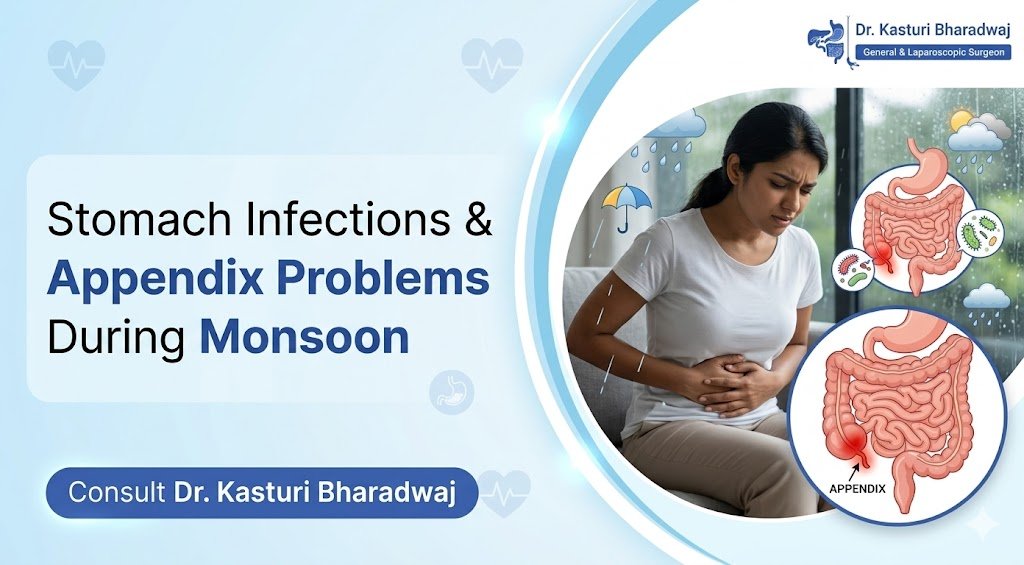
Many people experience digestive issues during the rainy season. Stomach infections and appendix problems during monsoon often become a concern because contaminated food, unsafe water, and seasonal infections can affect digestive health.
Although monsoon does not directly cause appendicitis, digestive infections during this season may produce symptoms that resemble appendix problems. Therefore, understanding the difference is important for timely medical care.
This article explains why digestive illnesses become more common during monsoon, how to recognize warning signs, and when abdominal pain requires medical attention.
Why Digestive Problems Increase During Monsoon
Monsoon weather creates favorable conditions for bacteria, viruses, and parasites to grow.
Common Reasons Include:
- Contaminated food and water
- Improper food storage
- Increased humidity promoting bacterial growth
- Consumption of unhygienic street food
- Reduced water quality during heavy rainfall
As a result, cases of food poisoning, gastroenteritis, and digestive infections often increase during the rainy season.
Common Causes of Stomach Infections During Rainy Season
Several factors contribute to stomach infections during monsoon.
Common Causes
- Bacterial contamination
- Viral gastroenteritis
- Food poisoning
- Unsafe drinking water
- Poor hand hygiene
These infections may affect people of all ages. However, children, older adults, and individuals with weaker immunity may be more vulnerable.
Early Symptoms of Stomach Infection
The symptoms may vary depending on the cause of infection.
Common Signs Include
- Abdominal cramps
- Nausea and vomiting
- Diarrhea
- Fever
- Loss of appetite
- Bloating
- General weakness
In many cases, symptoms improve with hydration and supportive care. However, severe symptoms require medical evaluation.
Why Appendix Problems May Be Missed During Monsoon
Appendicitis and stomach infections can initially produce similar symptoms.
Shared Symptoms
- Abdominal discomfort
- Nausea
- Vomiting
- Loss of appetite
- Mild fever
Because these symptoms overlap, some patients assume they have a stomach infection when they may actually have appendicitis.
Therefore, persistent or worsening abdominal pain should never be ignored.
Early Symptoms of Appendicitis
Appendicitis occurs when the appendix becomes inflamed.
Common Warning Signs
- Pain starting near the belly button
- Pain shifting to the lower right abdomen
- Loss of appetite
- Nausea and vomiting
- Mild fever
- Pain that worsens while walking or coughing
Unlike many stomach infections, appendicitis pain often becomes progressively worse over time.
Stomach Infection vs Appendicitis
| Feature | Stomach Infection | Appendicitis |
|---|---|---|
| Pain Location | General abdominal discomfort | Usually lower right abdomen |
| Diarrhea | Common | Less common |
| Vomiting | May occur | Common |
| Fever | Often present | Usually mild initially |
| Pain Progression | Often improves gradually | Usually worsens over time |
| Surgery Needed | Rarely | Often required |
This comparison can help patients understand why medical evaluation is important when symptoms persist.
When Abdominal Pain Requires Urgent Medical Attention
Some symptoms require prompt medical care.
Seek Medical Attention If You Experience:
- Severe abdominal pain
- Persistent vomiting
- High fever
- Blood in stool
- Signs of dehydration
- Sudden worsening of pain
- Pain concentrated in the lower right abdomen
These symptoms may indicate appendicitis or another serious abdominal condition.
How Appendicitis Is Diagnosed
Doctors may recommend:
- Physical examination
- Blood tests
- Ultrasound
- CT scan when necessary
Accurate diagnosis helps differentiate appendicitis from stomach infections and other digestive conditions.
Treatment Options
For Stomach Infections
Treatment may include:
- Hydration
- Oral rehydration solutions
- Dietary modifications
- Medications when appropriate
For Appendicitis
Appendicitis often requires surgical removal of the appendix.
Common Surgical Options
- Laparoscopic appendectomy
- Open appendectomy
The choice depends on the patient’s condition and clinical findings.
Monsoon Prevention Tips
Simple preventive measures can reduce the risk of digestive infections.
Protect Yourself During Monsoon
- Drink safe, filtered water
- Wash hands regularly
- Avoid improperly stored food
- Limit consumption of street food
- Eat freshly prepared meals
- Wash fruits and vegetables thoroughly
These habits can help lower the risk of food-borne illness.
Safety Considerations
Not all abdominal pain is caused by infection. Likewise, not every stomach infection indicates appendicitis.
However, severe, persistent, or localized abdominal pain should be evaluated by a healthcare professional. Delaying treatment for appendicitis may increase the risk of complications.
Conclusion
Stomach infections and appendix problems during monsoon can sometimes present with similar symptoms. While contaminated food and water commonly trigger digestive infections during the rainy season, persistent abdominal pain may indicate appendicitis or another condition requiring medical attention.
If abdominal pain becomes severe, localized, or continues to worsen, consulting a healthcare professional can help determine the underlying cause and appropriate treatment.
Medical Disclaimer
This article is intended for educational purposes only and should not replace professional medical advice, diagnosis, or treatment. Always consult a qualified healthcare professional for concerns regarding abdominal pain, digestive infections, or appendicitis symptoms.
FAQs
Why are stomach infections common during monsoon?
Increased humidity, contaminated food, and unsafe water sources contribute to higher rates of digestive infections during the rainy season.
Does monsoon increase the risk of appendicitis?
Monsoon does not directly cause appendicitis. However, digestive symptoms during monsoon may resemble appendicitis, making diagnosis more challenging.
Can stomach infection symptoms mimic appendicitis?
Yes. Nausea, vomiting, fever, and abdominal discomfort may occur in both conditions.
How can I identify appendix pain early?
Appendix pain often begins near the belly button and gradually moves to the lower right side of the abdomen.
What foods should be avoided during monsoon?
Avoid unhygienic street food, improperly stored food, and contaminated water sources.
When should abdominal pain be considered an emergency?
Severe pain, persistent vomiting, dehydration, or worsening right-sided abdominal pain requires urgent medical attention.


