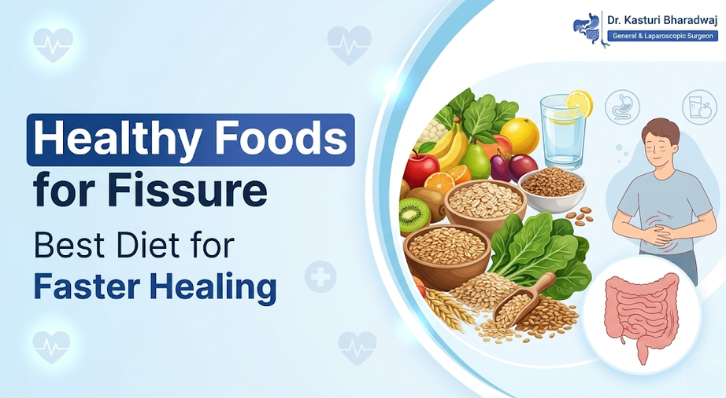
Many people search for healthy foods for fissure because diet plays an important role in reducing pain and improving healing. Anal fissures often worsen when hard stool causes strain during bowel movements.
A healthy diet rich in fiber and fluids helps soften stool and reduce pressure on the anal area. Therefore, proper nutrition can support recovery and lower the risk of recurrence.
This guide explains the best foods for fissure patients, hydration tips, and foods to avoid.
Why Diet Matters in Fissure Healing
An anal fissure is a small tear in the lining of the anus. Hard stool and constipation can worsen the tear and delay healing.
How Diet Helps
- Softens stool naturally
- Reduces straining during bowel movements
- Improves digestion
- Helps maintain regular bowel habits
As a result, patients often experience less pain and bleeding during recovery.
Best Healthy Foods for Fissure
A fiber-rich diet is commonly recommended for fissure patients.
Recommended Foods
- Oats and whole grains
- Brown rice
- Lentils and beans
- Fresh fruits
- Green vegetables
In addition, these foods help improve bowel movement consistency.
Fiber-Rich Foods That Help Soften Stool
Fiber absorbs water and makes stool softer and easier to pass.
High-Fiber Foods
- Oats
- Flax seeds
- Chia seeds
- Whole wheat roti
- Bran cereals
Indian Fiber-Rich Options
- Moong dal
- Khichdi with vegetables
- Vegetable soups
- Sprouts
Because of this, fiber helps reduce strain during bowel movements.
Fruits and Vegetables Good for Fissure Patients
Certain fruits and vegetables naturally support digestion.
Best Fruits
- Banana
- Papaya
- Apple (with skin)
- Pear
- Guava
Helpful Vegetables
- Spinach
- Carrot
- Bottle gourd
- Beetroot
- Cucumber
Meanwhile, fruits with natural water content also improve hydration.
Importance of Water and Hydration
Water works together with fiber to soften stool.
Hydration Tips
- Drink adequate water throughout the day
- Include coconut water or soups
- Avoid dehydration during hot weather
However, fiber without enough water may worsen constipation.
Healthy Breakfast Ideas for Fissure Patients
Starting the day with fiber-rich foods may improve bowel habits.
Breakfast Options
- Oats with fruits
- Vegetable poha
- Idli with sambar
- Whole wheat toast with banana
- Daliya (broken wheat porridge)
Therefore, a balanced breakfast supports smoother digestion.
Foods to Avoid in Fissure
Some foods may worsen constipation or irritation.
Foods That May Trigger Symptoms
- Spicy food
- Deep-fried snacks
- Excess junk food
- Processed foods
- Excess tea or coffee
In contrast, lighter meals are usually easier to digest.
Simple Daily Diet Tips for Fissure Recovery
Small lifestyle changes can support healing.
Helpful Habits
- Eat meals at regular times
- Avoid delaying bowel movements
- Stay physically active
- Increase fiber gradually
As a result, bowel habits become more regular and less painful.
When Diet Alone Is Not Enough
Diet helps many patients, especially in mild cases. However, chronic or severe fissures may still require medical treatment.
Consult a Doctor If You Have:
- Persistent pain or bleeding
- Symptoms lasting several weeks
- Difficulty passing stool despite diet changes
- Recurring fissure episodes
Risks of Ignoring Diet in Fissure
Poor dietary habits may increase the risk of:
- Chronic constipation
- Delayed healing
- Recurrent fissures
- Increased pain during bowel movements
Fortunately, consistent hydration and fiber intake often help improve symptoms.
Conclusion
Choosing the right healthy foods for fissure can support healing by softening stool and reducing strain during bowel movements.
Fiber-rich foods, proper hydration, and healthy eating habits often improve comfort and digestion. However, persistent or severe symptoms may still require medical treatment.
If symptoms continue despite diet changes, consulting a healthcare professional can help identify the appropriate treatment approach.


