
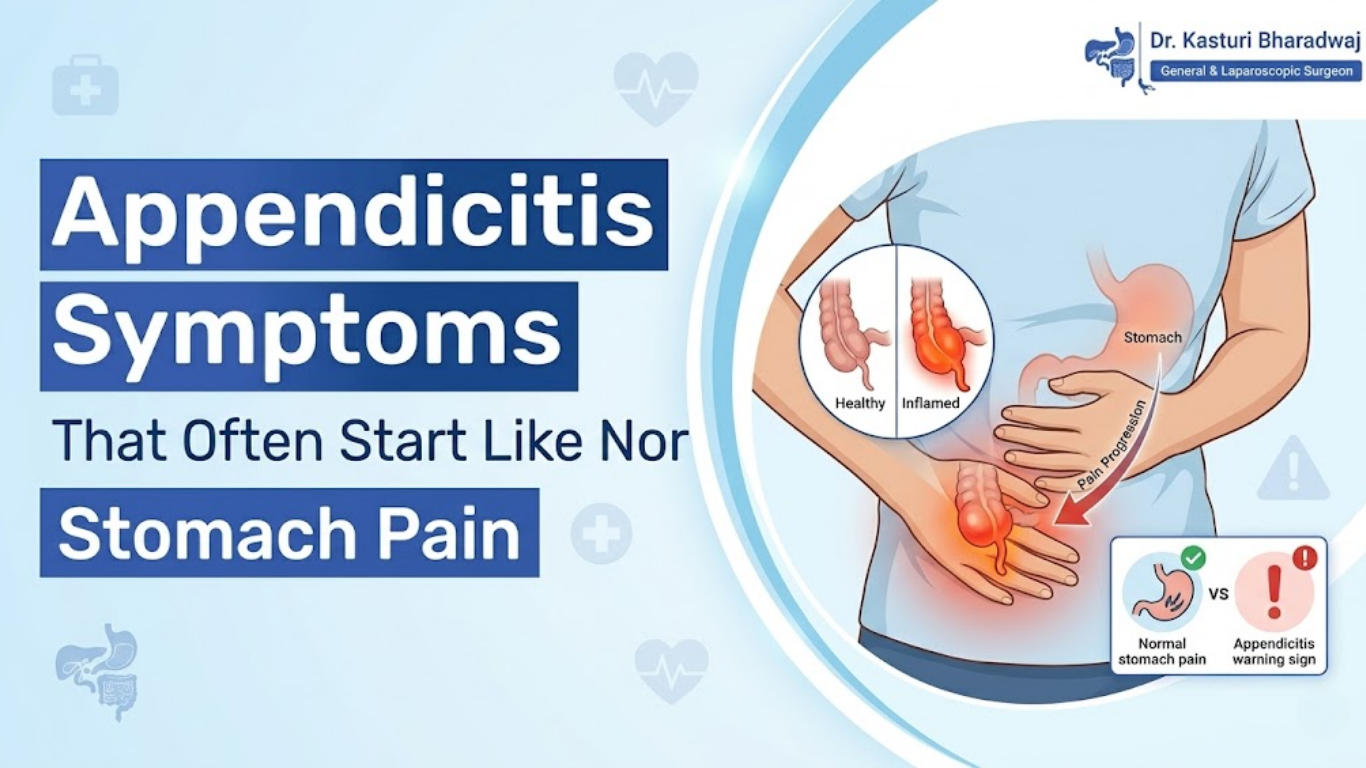
Many people dismiss mild abdominal discomfort as indigestion, gas, or a temporary stomach upset. However, appendicitis symptoms that start like normal stomach pain can gradually become a medical emergency if left untreated. Recognizing the early warning signs may help patients seek timely evaluation and appropriate treatment before complications develop.
While not every stomach ache is caused by appendicitis, understanding how the condition typically progresses can help you decide when professional medical assessment is necessary.
Why Appendicitis Is Often Mistaken for Normal Stomach Pain
In its early stages, appendicitis rarely begins with severe pain. Instead, many adults experience vague discomfort around the center of the abdomen that resembles common digestive problems.
Early symptoms may be confused with:
- Gas pain
- Indigestion
- Mild food poisoning
- Stomach infection
- Constipation
- Muscle strain
Because these symptoms overlap with many harmless conditions, people may delay seeking medical care until the pain becomes significantly worse.
How Does Appendicitis Usually Begin?
The appendix is a small pouch attached to the large intestine. When it becomes inflamed, irritation often starts gradually rather than suddenly.
Many patients first notice:
- Dull pain around the belly button
- Mild abdominal discomfort
- Loss of appetite
- Feeling generally unwell
Over several hours, the pain frequently shifts toward the lower right side of the abdomen, where the inflamed appendix is located.
Early Symptoms of Appendicitis
Although symptoms vary between individuals, common early warning signs include:
- Pain around the belly button that does not improve
- Pain that gradually moves to the lower right abdomen
- Nausea or occasional vomiting
- Reduced appetite
- Mild fever accompanying abdominal pain
- Abdominal tenderness when touched
- Pain that worsens while walking, coughing, or changing position
- Increasing discomfort over time rather than relief
Some people may not experience every symptom, particularly older adults, pregnant individuals, or young children.
How Appendicitis Pain Changes Over Time
One characteristic feature of appendicitis is the progression of pain.
Early stage
The discomfort may feel similar to an upset stomach or indigestion and is often difficult to pinpoint.
Intermediate stage
Within several hours, the pain commonly migrates toward the lower right side of the abdomen and becomes sharper.
Advanced stage
The pain may become severe and constant, making movement uncomfortable. Additional symptoms such as fever, vomiting, or marked abdominal tenderness can develop.
Persistent or worsening abdominal pain should never be ignored, especially when accompanied by other concerning symptoms.
Stomach Pain or Appendicitis? Key Differences
Simple stomach upset often improves with rest or hydration, whereas appendicitis typically worsens over time.
Features that may suggest appendicitis include:
- Pain that steadily intensifies
- Pain moving from the center of the abdomen to the lower right side
- Associated nausea and loss of appetite
- Tenderness when pressing the abdomen
- Pain aggravated by coughing or walking
- Low-grade fever with abdominal pain
Only a qualified healthcare professional can make the diagnosis through clinical examination and appropriate investigations.
Warning Signs That Require Immediate Medical Attention
Seek urgent medical evaluation if abdominal pain is accompanied by:
- Severe or rapidly worsening pain
- Pain concentrated in the lower right abdomen
- Persistent vomiting
- High fever or chills
- Significant abdominal swelling
- Inability to walk comfortably because of pain
- Confusion or fainting
- Blood in vomit or stool
Delayed treatment may increase the risk of appendix rupture and serious abdominal infection.
How Appendicitis Is Diagnosed
Doctors evaluate appendicitis using a combination of medical history, physical examination, laboratory tests, and imaging studies.
Investigations may include:
- Blood tests to assess signs of infection
- Urine tests to exclude urinary causes
- Ultrasound examination
- CT scan when clinically indicated
- Additional imaging based on individual circumstances
Diagnosis is based on the overall clinical picture rather than a single symptom.
Treatment Options for Appendicitis
Treatment depends on the severity of the condition and the treating surgeon’s assessment.
Common management options include:
- Intravenous fluids and antibiotics in selected situations
- Surgical removal of the appendix (appendectomy)
- Laparoscopic appendectomy, which uses small incisions and is commonly performed when appropriate
- Open surgery in cases where minimally invasive surgery may not be suitable
The choice of treatment varies according to the patient’s health status and clinical findings.
Risks of Delaying Treatment
Ignoring persistent abdominal pain may allow inflammation to worsen.
Potential complications include:
- Ruptured appendix
- Infection within the abdominal cavity
- Formation of abscesses
- Longer hospital stay
- More complex surgical management
Because symptom progression differs between individuals, persistent or worsening pain deserves prompt medical evaluation.
Conclusion
Appendicitis often begins with symptoms that resemble an ordinary stomach ache, making early recognition challenging. Pain that starts near the belly button, gradually moves to the lower right abdomen, or worsens over time—especially when accompanied by nausea, fever, or loss of appetite—deserves prompt medical attention.
If you experience persistent or escalating abdominal pain, consult a qualified healthcare professional for an appropriate evaluation rather than relying on home remedies or self-diagnosis.
Medical Disclaimer: This article provides general educational information only and is not a substitute for professional medical advice, diagnosis, or treatment. Always seek guidance from a qualified healthcare provider regarding symptoms or medical concerns.
FAQs
1. Can appendicitis start as mild stomach pain?
Yes. Appendicitis often begins with vague discomfort around the belly button or upper abdomen that may resemble indigestion or gas. As the inflammation progresses, the pain commonly becomes more localized and intense.
2. How does appendicitis pain change over time?
In many cases, the pain starts near the belly button and gradually shifts to the lower right side of the abdomen over several hours. It may worsen with movement, coughing, or walking.
3. Can appendicitis be mistaken for gas or indigestion?
Yes. Early appendicitis symptoms can overlap with gas, indigestion, or a stomach infection. Persistent pain that worsens, changes location, or occurs with nausea, fever, or loss of appetite should be evaluated by a healthcare professional.
4. What are the first signs of appendicitis?
Common early signs include abdominal pain around the belly button, loss of appetite, nausea, mild fever, and increasing tenderness. Not everyone experiences the same symptoms.
5. When should I go to the hospital for abdominal pain?
Seek prompt medical care if abdominal pain is severe, progressively worsening, moves to the lower right side, or is accompanied by fever, repeated vomiting, abdominal swelling, or difficulty walking due to pain.
6. Does appendicitis always cause severe pain?
No. Some patients experience only mild or moderate discomfort initially. Symptoms can vary depending on age, anatomy, and the stage of inflammation.


